Millennium of Tanbur
Yaresani Maqams of Tanbur – album booklet
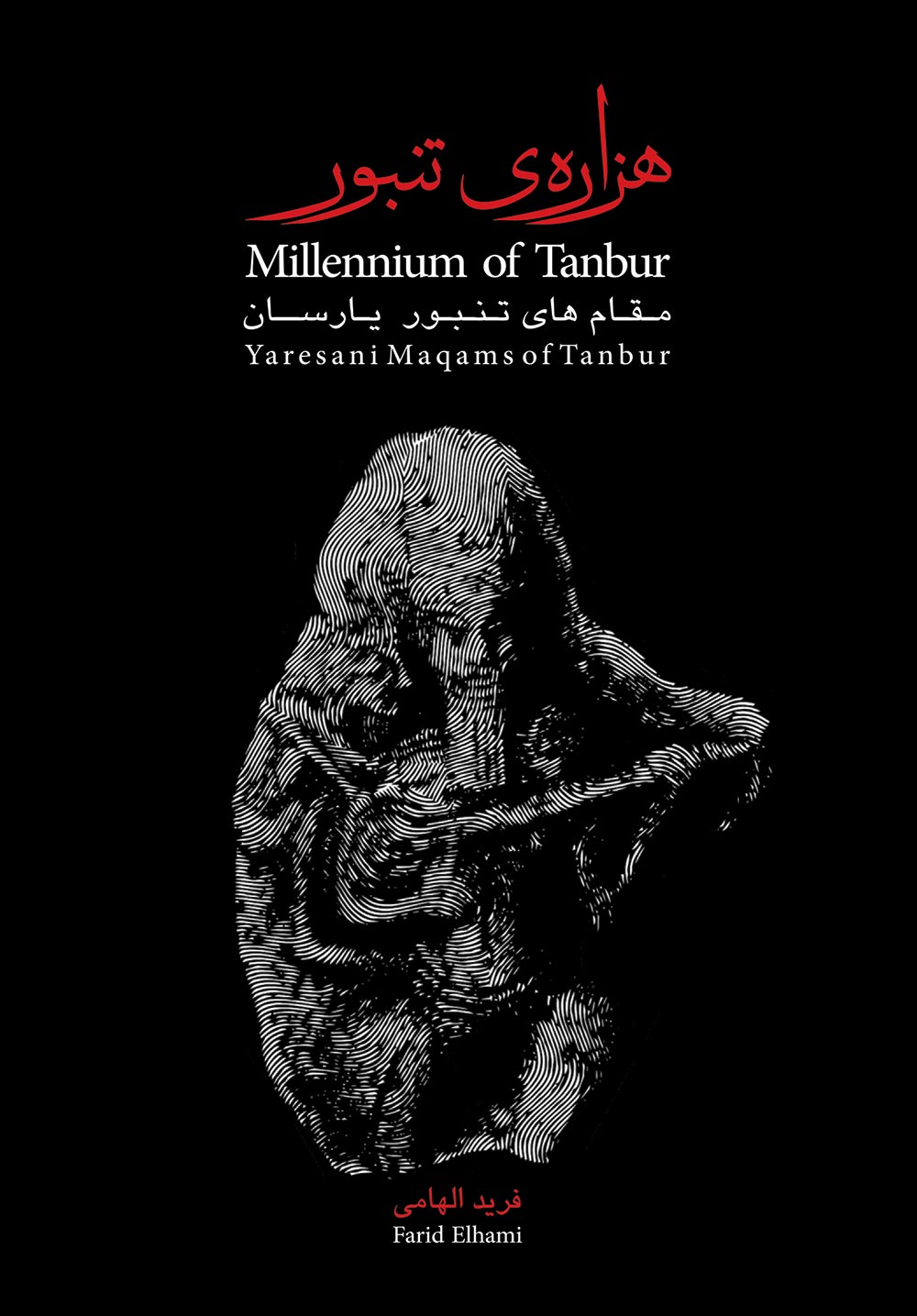
This is the booklet that accompanies the album Hezare-ye Tanbur – Millennium of Tanbur: Yaresani Maqams of Tanbur, published by the Parseh Soroush Ferdowsi Institute. It contains the track lists, notes on the maqams, photographs and the album credits; the album text is in Persian, with the track titles also in English. The pieces of the album can be heard in the playlist “Millennium of Tanbur – Farid Elhami” in the video section of this site.
Credits
• Collected and performed by: Farid Elhami
• Recording, mixing and mastering: Vahid Mehri
• Translation: Azita Rabbani and Elham Keramati
• Booklet editor: Elham Keramati
• Graphics and photos: Reza Salehi
• Chorus: Forud Khamushian, Navid Ghazvinei, Touraj Aliyoun, Ramtin Kakavandi
• Funded by: Shahpar Ghahari and Goudarz Tatari
• Publisher: Parseh Soroush Ferdowsi Institute (www.ferdowsimusic.com)
About the album
Among Iran’s ancient instruments the tanbur holds a unique place: not only an instrument to be played but a language of mystery and zekr (devotional remembrance). For centuries it has resounded in the Zagros mountains, telling of the rites, prayers and mystical states of the Yarsan (Ahl-e Haqq).
The album Millennium of Tanbur is the fruit of Farid Elhami’s years of research and practice and of his love for the instrument and the culture behind its melodies – a monumental work released in eight separate parts.
Structure
According to the booklet, the maqams – following the narrators of the Sahneh region – are presented in three parts: the Haqqani maqams; the ancient and figurative (majlesi) maqams; and pieces by contemporary masters (sardam). Among them are Sahari, Khan Amiri, Eyd-e Yarane and Shah Khoshini. Elhami tries to show the fine differences between local and family versions of these maqams, drawing a broad map of the ritual music of the tanbur.
Musical language
The first thing one hears is the purity and simplicity of the melodies, without unnecessary ornament. Elhami’s playing follows the narrators of the Sahneh region, while in many places his own present-day interpretation can be heard. The rhythm is sometimes free and improvised, sometimes ritual and zekr-like, repetitive and trance-inducing; the melodies are built on natural intervals, local modes and the characteristic turns of the maqam music of western Iran rather than on the Persian dastgah system.
Research and culture
The collection is also an effort to document and preserve the oral heritage of the tanbur, handed down from teacher to student for centuries. With careful recording, naming and arrangement of the maqams, it serves listeners of Iran’s mystical music as well as researchers of regional music and maqam studies.
- Publisher
- Parseh Soroush Ferdowsi Institute
- Language
- fa
- Pages
- 47
- Subjects
- تنبورمقامیارساندفترچهی آلبوم
- Shelves
- Maqams and transcriptions
Embed
Show this book on another website
Paste this code into a page of your website. It shows the book's cover, title and a link to it here.
Reviews
No reviews yet.