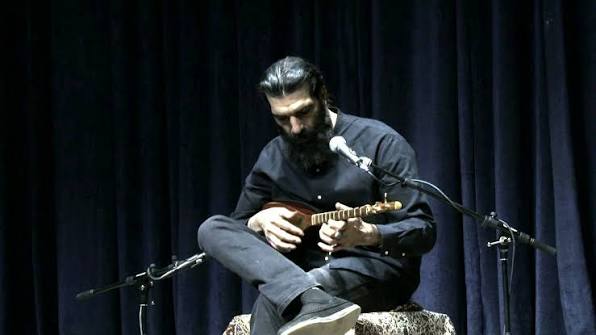
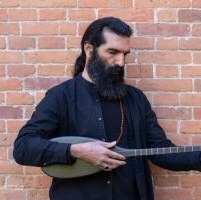
Ali Asghar Rahimi, a composer, singer and tanbur player, was born in Isfahan in 1352 SH (1973/74). He began playing the tanbur in 1370 SH (1991/92) with teachers such as Touraj Honarjou, Seyed Ali Jaberi and Mozaffar Berenji, and later learned the maqams (traditional melodic pieces of the tanbur) of both tanbur traditions from Seyed Amrollah Shah-Ebrahimi and Taher Yarveysi.
In 1376 SH (1997/98), at the invitation of the Isfahan Conservatory of Music, he started the first tanbur class in Isfahan province. In 1377 SH (1998/99) he founded the Rouhafza music ensemble and led it in concerts in Iran and abroad, among them a performance with Taher Yarveysi in Isfahan in 1390 SH (2011/12). The Isfahan Tanbur Association, devoted to maqam music, was registered and opened with the support of the Isfahan municipality in 1393 SH (2014/15), and Rahimi heads it. In the same year the Cultural Heritage Organization appointed him to the expert committee for registering intangible heritage in music. He is also a member of the House of Music of Iran, since 2016 he has directed the Yasna ensemble, and he founded the company Yasna Production.
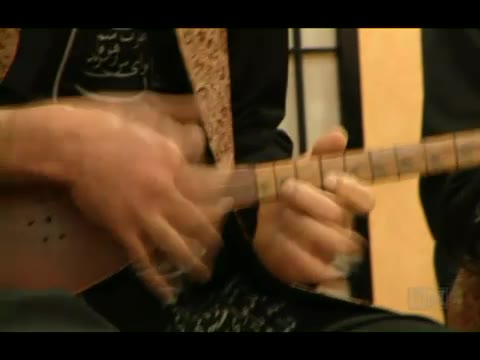
Besides the usual plucking techniques, Rahimi uses strumming patterns of his own on the tanbur, and as a composer he draws on the possibilities of the tanbur maqams. The poetry of Rumi, Omar Khayyam and Ain al-Qudat Hamadani inspires much of his work. His compositions include Saman-buyan (1375 SH, 1996/97), on a poem by Hafez sung by Pouran Ahmadi, in which he plays tanbur, bass tanbur and soprano tanbur himself; Hengam-e Sahar; and the music videos Dam-e Isavi and Sahebdam, which he composed and sang. Sahebdam, directed by Payam Davoudi, was commissioned by UNESCO and produced by the Creativity and Innovation Centre of the Isfahan municipality. His artist profile lists the projects Invisible Fire, Shams and Tanbour, Death to Birth, Sound of Rumi and Chants of Light, the album Ancestral Dialects (2019) and the score for the film Simin (2018). In April 2018 an album of his settings of Rumi sung by Shahram Nazeri was announced; a performance of the maqam Sarukhani with Nazeri singing and Rahimi on tanbur was also shared by the channel “Navaye Tanbur”.
His first concert series in Romania took place in 1392 SH (2013/14) at the invitation of the Iranian embassy, and much of his later work has been in that country. In August and September 2017 he presented Sound of Rumi at the National Theatre in Bucharest and gave a concert and lecture at the invitation of the National University of Music Bucharest. In February 2018, in the joint concert Chants of Light with the Romanian Byzantine choir Evloghia, he brought tanbur maqams together with Christian liturgical chant, and in July 2018 he performed his compositions at the Râșnov festival with artists from Romania, Bosnia and Hungary.
In 2017 he was one of forty musicians, chosen from 1,700 applicants worldwide, invited to the fourth edition of the Visa for Music festival in Morocco. The daf player Mohsen Taherzadeh accompanied him, and musicians from Gambia, Guinea, Niger and Burkina Faso joined him in shared performances; according to the channel, this was the first time tanbur maqams were combined with traditional African music. On 3 May 2018 the Yasna ensemble under his direction performed the programme Helhela at a “Night of Iranian Music” in the main hall of the Qatar National Theatre in Doha. He has also performed in Turkey (at the Mevlana festivals in Konya), the United Kingdom, Nepal, Lebanon, Russia and Finland.
According to the “Navaye Tanbur” channel (June 2026), Rahimi has released his compositions and his way of playing and singing on ten albums in Iran and abroad, among them “Bangi Ajab” with Shahram Nazeri, and has composed music for several feature films and television documentaries. On the album “Madad” he set old styles of praise-singing for Imam Ali in various forms of darvish singing; its pieces are “Sahba”, “Darvish”, “Mey-parast”, “Hengam-e Sahar”, “Hu”, “Do Su”, “Saheb-dam” and “Madad”. The same text adds South Africa and France to the countries where he has given concerts and workshops.
Sources: Telegram channel “Navaye Tanbur”, February 2017 to July 2018 and June 2026 (partly quoting IRNA and others); Hamshahri newspaper (Isfahan edition), interview by Saeed Emami Abarghouei, April 2018; artist profile on Ethnocloud and his website.