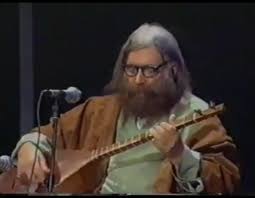
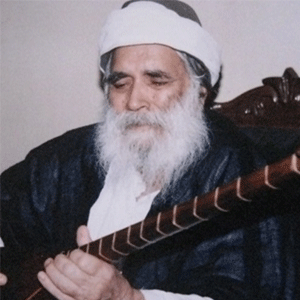
Amir Hayati
Composer, tanbur player and singer
1922–2006Amir Hayati (born 14 February 1922 in Sahneh – died 15 March 2006 in Tehran) was an outstanding tanbur player, a master of the maqams (the traditional melodic models of the tanbur), a kalam singer (a singer of kalams, the sacred hymns of the Yarsan, a Kurdish mystical faith) and a poet of Lak descent, remembered as the true narrator of the Sahneh school of tanbur playing.
He began playing the tanbur with his father at the age of twelve and then spent years studying the majlesi and haqqani maqams (secular maqams for gatherings and sacred ones) with Agha Seyed Nasreddin Jeyhunabadi, one of the renowned masters of the time. Hayati’s personality was a blend of simplicity, fervour, love and mystical madness, a quality that was clearly reflected in his playing and maqam singing and set him apart from other tanbur masters.
Among his famous students were Seyed Khalil Alinejad and Keykhosrow Pournazeri, both of whom later became influential figures in the continuation and spread of tanbur music.
Amir Hayati was the first player to accompany Persian poetry on the tanbur; before him, the tanbur was used only to perform Laki and Kurdish poetry. This innovation opened a new horizon for the musical expression of the tanbur and paved the way for widening its audience among Persian speakers.
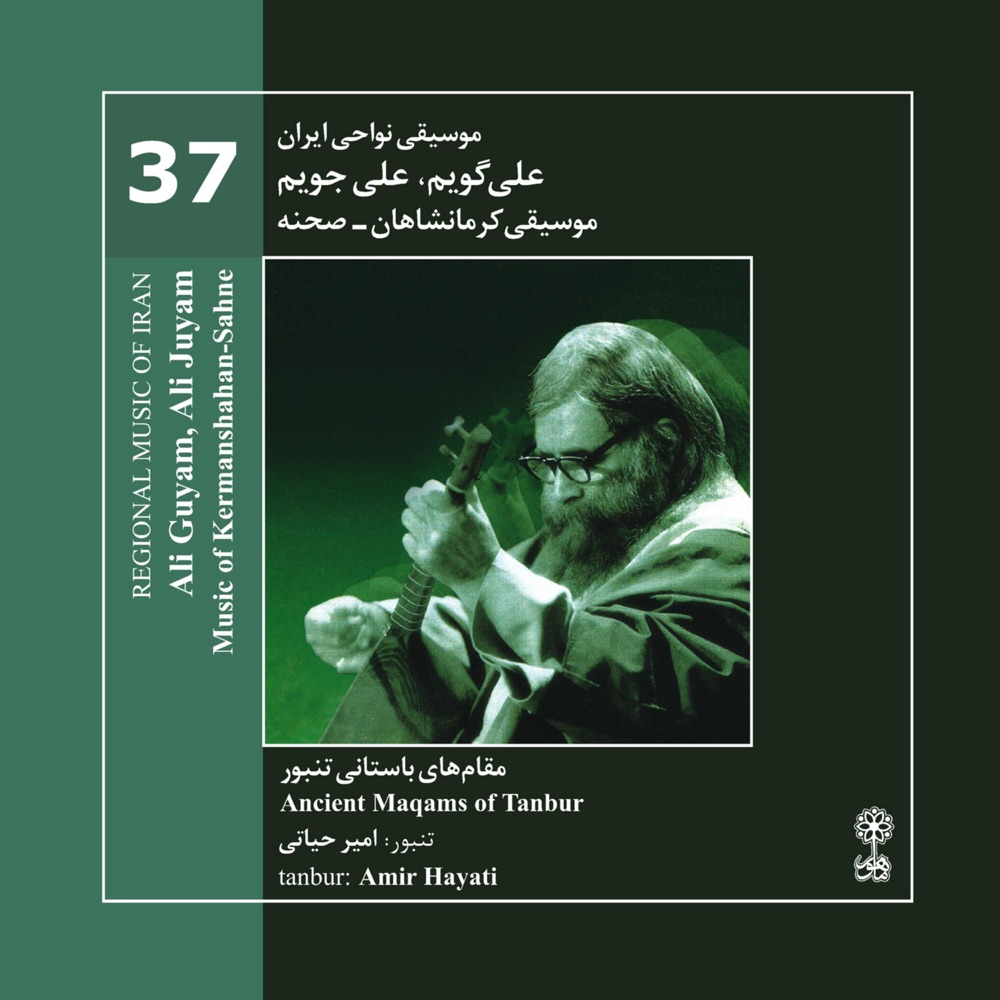
In the early 1950s, at the invitation of friends, he moved to Tehran, where he lived for the rest of his life. In 1960 he composed the famous piece Ali Guyam Ali Juyam (“Ali I Speak, Ali I Seek”), regarded as one of his most enduring works. That same year he was invited by Radio Iran to record and perform several ancient tanbur maqams and this signature piece, a step that played a major role in making tanbur music known beyond the borders of Lorestan and Kermanshah.
Amir Hayati’s playing was full of authenticity, feeling and improvisation, and many players of the last half-century have been influenced by his style, directly or indirectly. He called his instrument “Neda al-Haqq” (“The Call of the Truth”): a tanbur with a larger bowl and a more resonant sound, which seemed to carry the echo of his soul.
The funeral procession for this renowned master set out from Vahdat Hall in Tehran in March 2006, and Iran’s music community lost one of the most important authentic voices of the tanbur.