Seyed Ghadamyar Hosseini
Kalam singer, tanbur player and maqam master
c. 1893/94–2014Life and education
Seyed Ghadamyar Hosseini was born in 1893 in the village of Baktar-e Sofla, in the Jeyhunabad area of Sahneh County, Kermanshah province. His identity card gave 1908 as his year of birth, but by his own account it was only issued when he was fifteen, which is why 1893 is taken as the year he was born.
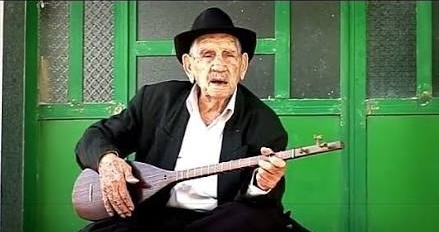
He was a veteran kalam singer (kalams are the sacred hymns of the Yarsan), tanbur player and master of the maqams (the traditional melodic pieces of the tanbur repertoire). He began playing the instrument as a child with his father, Seyed Taher Morad, his uncle, Seyed Baba Hossein, and his elder brother, Seyed Salman, and later spent years studying with Master Seyed Nasreddin Khamushi Jeyhunabadi to complete his knowledge. He used to recount that one day his teacher gave him a tanbur made by Master Khodaverdi, one of the most important tanbur makers, telling him that he had become a master of the instrument himself.
Seyed Ghadamyar belonged to the same generation as masters such as Seyed Amrollah Shahebrahimi, Darvish Amir Hayati, Hossein Ruhtafi, Seyed Ahmad Hosseini, Seyed Almas Hosseini, Seyed Elyas Hosseini and Seyed Aghamorad Hosseini.
Personal life
He had two brothers, Seyed Salman and Seyed Aghayar, and six sisters. At 26 he married his cousin, and their only child was a son, Seyed Momen Hosseini. His wife died in 1984 and he never remarried. He spent the rest of his life in Baktar-e Sofla, his mother’s village, where he died; in accordance with his wishes he was buried in the village cemetery.
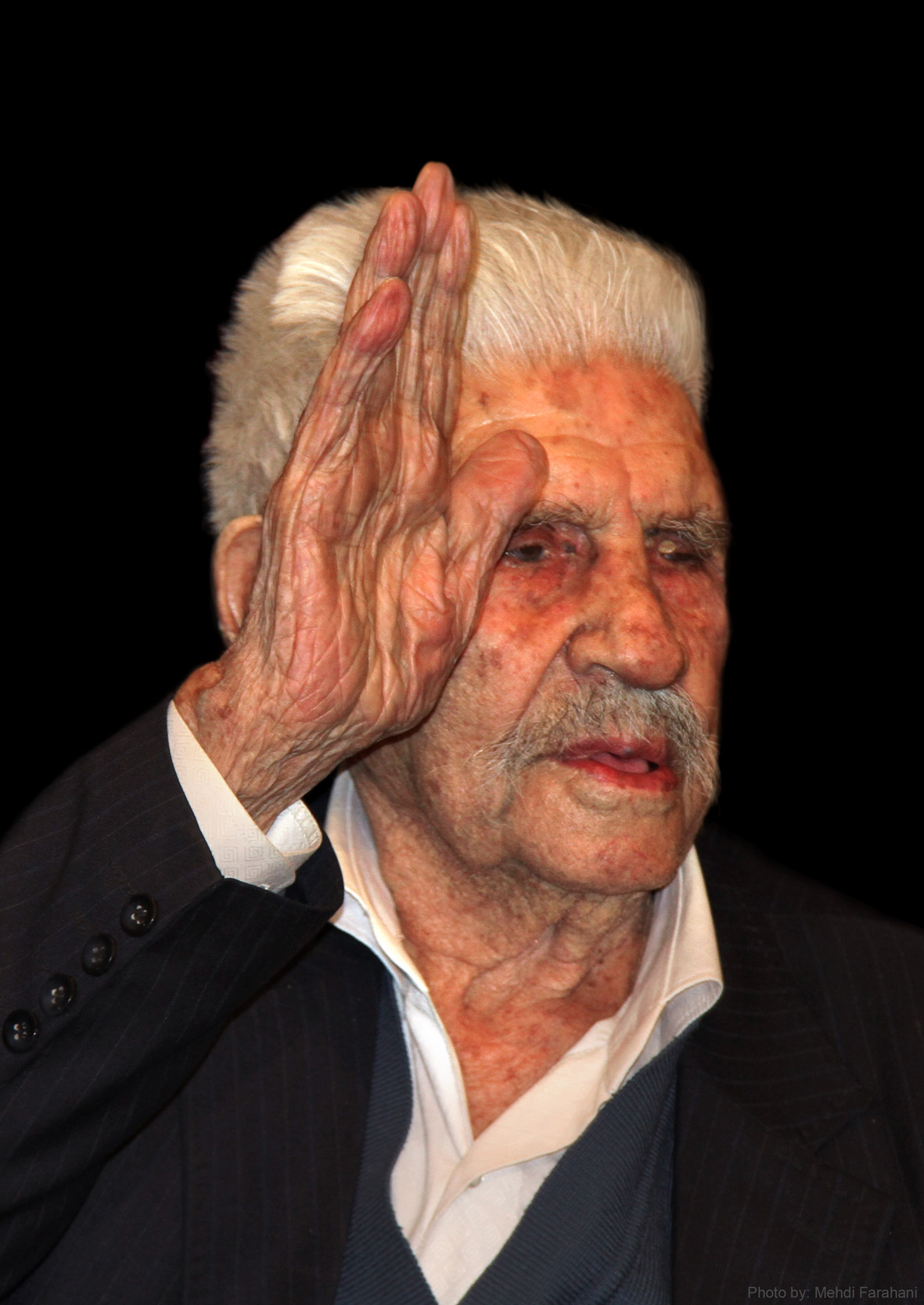
Seyed Ghadamyar lived for more than 120 years, which is why he is remembered as the “Pir-e Tanbur” (“Elder of the Tanbur”) and as the oldest tanbur player.
Students and legacy
Several of today’s leading tanbur masters, among them Keykhosrow Pournazeri, Ali Akbar Moradi and Seyed Salman Hosseini, were his students.
He appeared on stage at the seventh Regional Music Festival and at a four-session tanbur workshop in Tehran, and was honoured as one of the enduring figures of Iran’s maqam music. At the Regional Music Festival he performed the maqams Tarz, Kaka Redaei, Baba Faqihi, Shah Khoshini and Leyli o Majnun (“Leyli and Majnun”).
A few years after his death, Arefeh Mohammadi made a documentary about his life, Avaz-e Khoda (“The Song of God”), which received recognition at several festivals abroad. Two audio recordings of his tanbur playing are due to be released by Mahoor.