Agha Seyed Shamseddin Heydari
Head of the Heydari tekyeh and mentor of tanbur masters
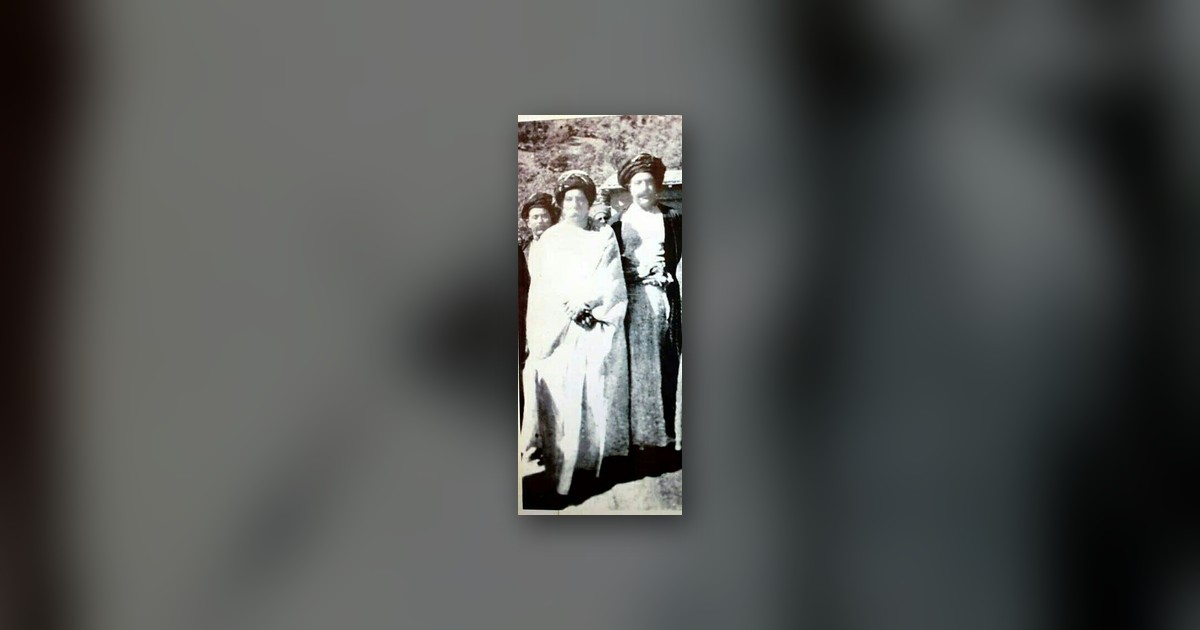
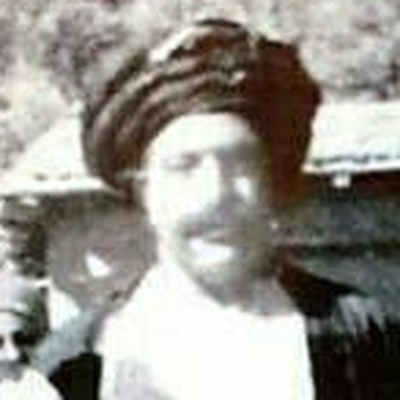
1894/95–1948Agha Seyed Shamseddin Heydari, the valiant son of Seyed Rostam Heydari of Guran, was born in 1273 SH (1894/95). Once again the land of Dalahu was graced by the footsteps of another of the Yaran (the faithful) and heads of the Heydari tekyeh (a Yarsan religious centre). From his earliest childhood and youth he embodied love and kindness, patience and forbearance, and indifference to the world and material things. A verse he left behind shows this detachment from the world.
In translation the verse says, roughly: until I reach the valley at the head of the meadow, I am caught in this faithless and deceitful world.
In 1312 SH (1933/34) he was appointed head of the Heydari tekyeh in Tutshami, Guran, as his father's successor; according to another account, his headship of the tekyeh began in 1311 SH (1932/33), during his father's lifetime. His tenure coincided with the height of Reza Khan Pahlavi's dictatorship.
His time as head of the tekyeh recalled the era of Shah Khoshin (a central figure of Yarsan sacred history), and according to the Yarsan elders it became known as the “Shah Khoshini era”, because with his discernment and natural intelligence he spared no effort in collecting the Heydari daftars of the Chehel-tan (the Forty) – daftars being the Yarsan sacred books. Spiritually he was a learned and cultivated man who had thoroughly studied the holy books. It was also in his time that the Heydari Chehel-tan daftars were published and placed in the hands of the public for the first time. He is one of the most important figures whose labour and effort played a major part in the training of students, the teaching of the authentic Pardiwari maqams (traditional melodic pieces/modes of the tanbur), and the recording and dissemination of the Yari daftars.
The art of playing the mystical tanbur, the singing of kalam (the sacred hymns of the Yarsan) and the interpretation of the kalam flourished in his time and reached their peak. He personally ran gatherings for kalam singing and tanbur playing, with teaching under his own supervision, held classes in the tanbur maqams and in the interpretation of the Yari daftars, and trained renowned masters such as Seyed Vali Hosseini, Kaki Allahmorad Hamidi, Kadara and Ka Azam Manhuei. Daftar reading combined with discussion classes is one of the legacies of that period, and it can safely be said that this was one of the most important periods for the Yarsan.
Agha Seyed Shamseddin Heydari gave the Yarsan community students in maqam and traditional music who have since trained thousands of students of their own. In maqam music he raised students such as Ka Darab Manhuei, Seyed Abdol Hosseini (the father of Seyed Vali Hosseini, the famous maqam master of Guran) and Seyed Mahmoud Alavi, among others; in traditional instruments he raised Adel Khan Danyali (tar), Ahmad Khan Yasami (mukesh) and Ka Bashar Bazhuei, interpreter of the Heydari Chehel-tan daftars and a great poet. It can safely be said that without Agha Seyed Shamseddin's unstinting efforts to preserve and promote the authentic tanbur maqams, the kalam, kalam singing and the interpretation of the Yari daftars, we would not see today the all-round flourishing and growth of the tanbur and its maqams in the new generation.
His leadership of tribal affairs, which also had a religious dimension, was at odds with the governmental and strategic power of Reza Shah. In the First World War he was always on the front line alongside Seyed Rostam and the other Heydari seyeds. The most important event of that time was the battle of Kerend, in which almost all of the Guran, Qalkhani and Sanjabi tribes took part.
In 1320 SH (1941), when Iran was occupied by the Allies, he was governor of Guran. Thousands of hungry and exhausted Iranian soldiers and officers (5,000 by one account) were placed under the protection of Agha Seyed Shamseddin and his grand tekyeh for a week. The tribal chiefs, especially those of Guran, joined the British; they did not regard the Agha's popular and mystical rule as serving their interests, and once again installed Gholamali Khan (Salar Mansur) as ruler of Guran.
It was after the unrest of 1320 SH (1941) that foreigners turned their attention to the Heydari tekyeh, although earlier, when Seyed Rostam headed the tekyeh, they had several times moved against it without success. The British set up an ambush opposite the village of Tutshami. Colonel Fletcher, a senior British officer, banished him to his own command headquarters in Kermanshah. There he was interrogated by an Iranian officer; in his fury Agha Seyed Shamseddin slapped the officer hard across the face and called him “a chained dog of the British”. As a result of this incident he was unjustly imprisoned by the central government in Tehran for two years. After serving his imprisonment he returned to the tekyeh with full honour.
The historic war of the Qalkhani against the Babajani tribe was another episode that took place under his leadership. He did not refuse the call for help from Jahangir Khan Espari, chief of the Qalkhani tribe; the chiefs of the Sanjabi, Guran and Qalkhani tribes rallied behind the Agha, and the war ended in the defeat of the Babajani tribe.
Agha Seyed Shamseddin Heydari married Shahzanan Khanum Yasami, daughter of Hossein Khan Sardar-e Moazzam of Guran, after the death of Davood Khan Amir-e Azam Kalhor in 1330 AH (1911/12); the marriage of these two lovers remained childless. Throughout his life there were events in which no one but Shahzanan Khanum could soothe the pain and suffering of this protector and saviour of the Yarsan.
The great building of the Heydari tekyeh was under construction when, like Job, he was struck by severe pain in his legs. He was taken first to Kermanshah and then, as the doctors were unable to cure him, to Tehran. No one but his companion and confidante, Shahzanan Khanum, understood what he was going through; she said: “The cure for all pains is in the tekyeh, but he has to go to Tehran.” He died on 27 Azar 1327 SH (18 December 1948), at the age of 54, while the great building of the Qasr-e Shahi (“royal palace”) was still unfinished.
Source: Telegram channel “Navaye Tanbur”, 12 October 2016, 9 January 2017 and 31 January 2017; written by Faramarz Khosravi and Heydar Heydari-Rad (research and compilation).