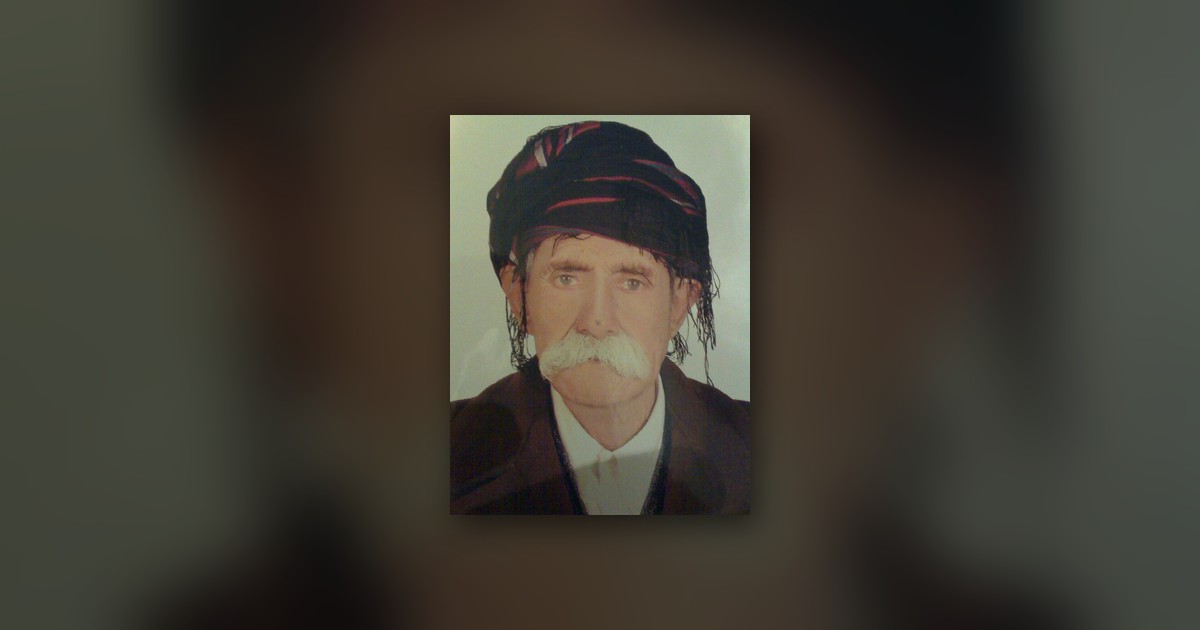
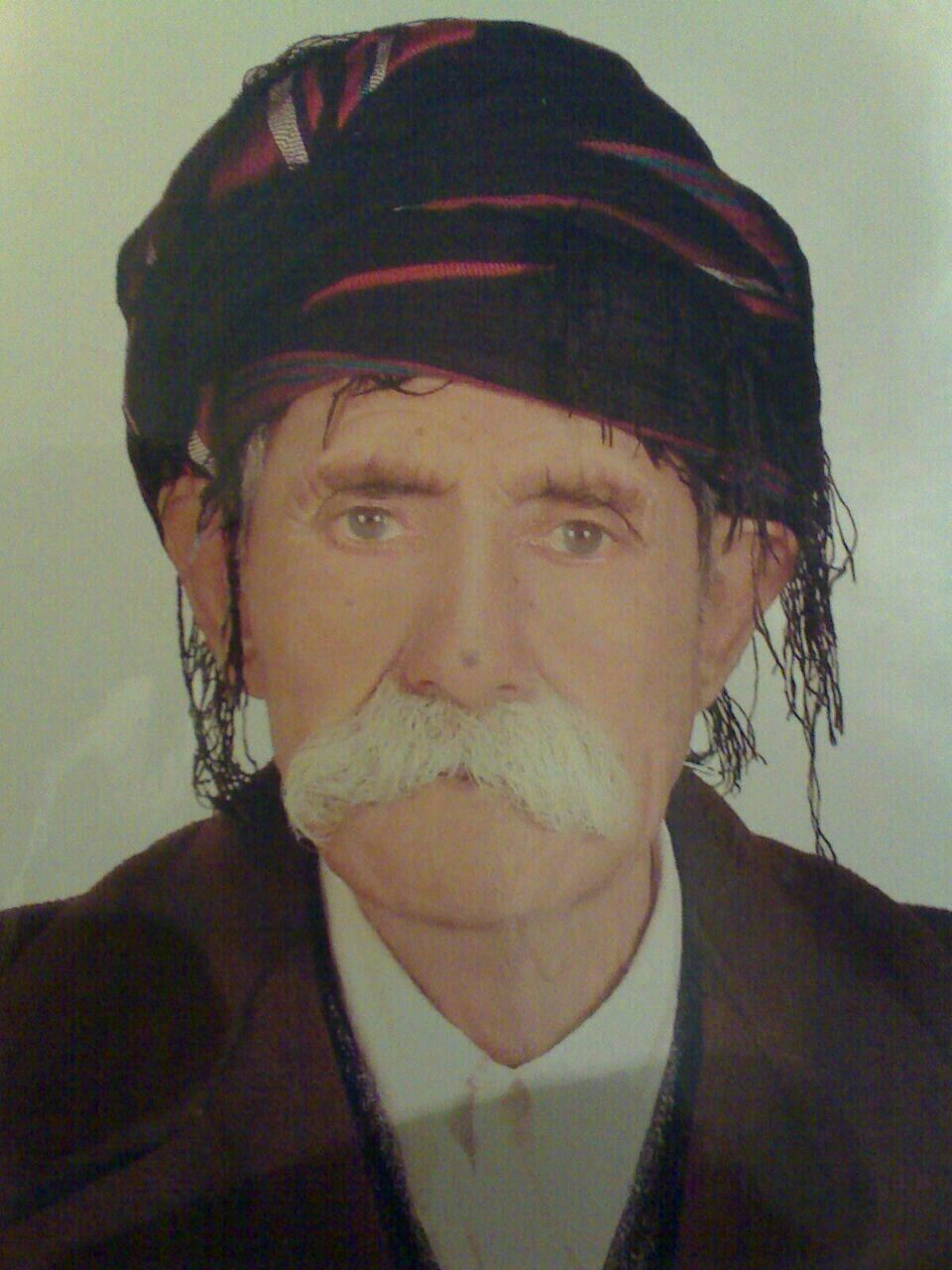
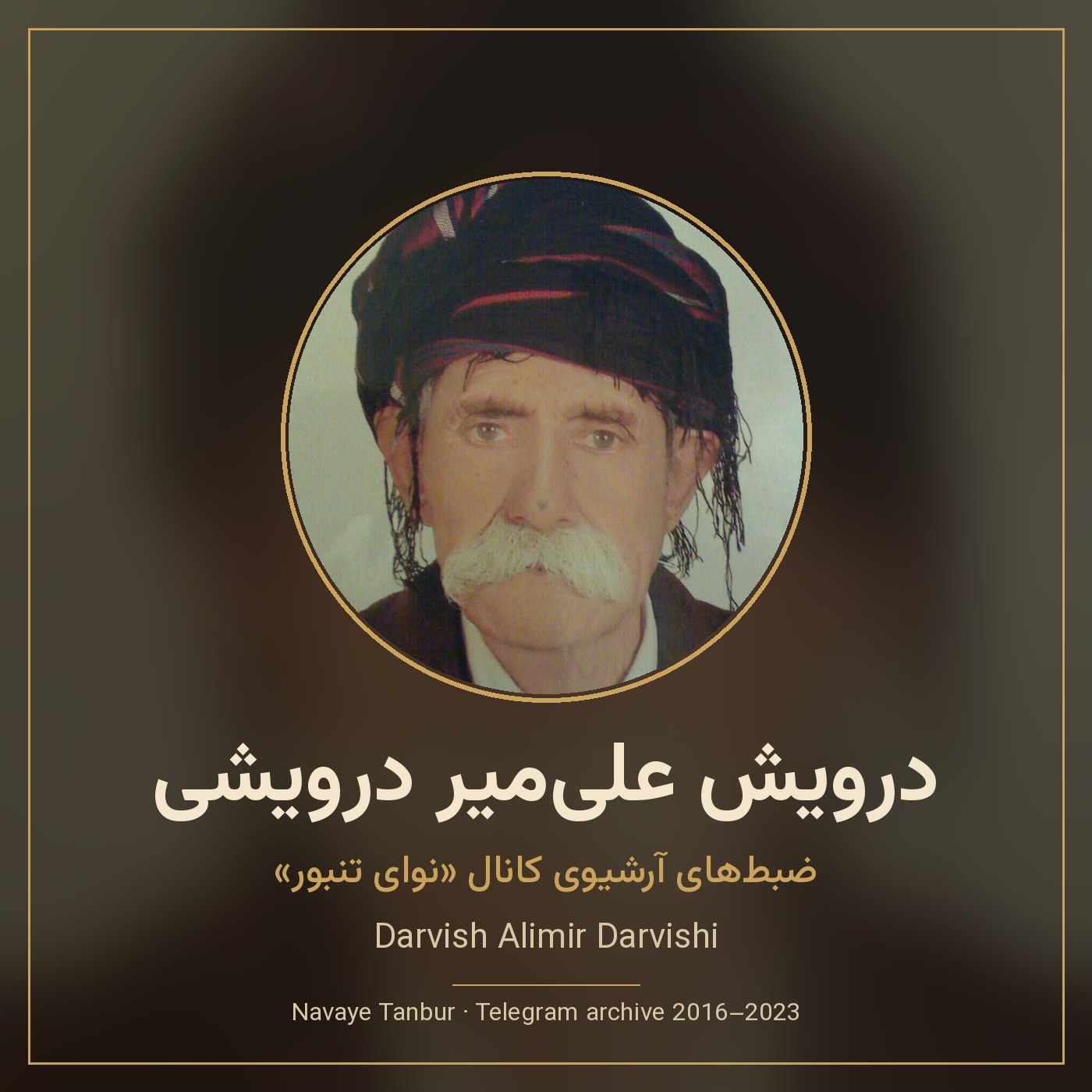
Darvish Alimir Darvishi
Tanbur player, kalam singer and daftar interpreter
1924–2004/05The late Darvish Alimir Darvishi was the son of Haji and the grandson of Beg Amir, who was the son of Alimir (in the time of Seyed Brakeh he served at the jam – the Yarsan ritual gathering – of Seyed Brakeh's Chehel-tan (Forty)). Khan Amir, an ancestor of Darvish Alimir, was one of the greatest masters of Kurdish music; the maqam (a traditional melodic piece/mode of the tanbur) “Khan Amir” has come down from him.
Darvish Alimir was born in the month of Mehr 1303 SH (September/October 1924) into a devout family in the village of Biakhavan in Guran; according to another account, he was born in 1303 SH in the village of Tutshami. Already as a child, in Dol Dalan (Tutshami), his pure and unblemished nature won him the favour and grace of Seyed Rostam and Agha Seyed Shamseddin Heydari – an attention and a spiritual circle whose effect later showed itself more and more in him – and in the presence of these revered figures he attained a full knowledge of and familiarity with the foundations of the Yari faith. Later he made his home in the village of Bidaghvand in Guran.
He is counted among the most outstanding figures in the history of the Yari faith: a clear example of self-sacrifice and selflessness, the embodiment of sincerity and patience, a fount of generosity and a deep sea of the knowledge and truths of the Yari faith. Through great effort and perseverance, and with the kindness and support of Agha Seyed Shamseddin, he reached the highest rank in tanbur playing and kalam singing (kalam: the sacred hymns of the Yarsan), as well as in copying and interpreting the daftars of truth (daftar: the Yarsan sacred books). In time his unrivalled mastery in knowing all the daftars of the Yari faith by heart and in playing all the principal tanbur maqams became prominent and widely recognised.
Besides religious learning and mysticism, Darvish Alimir and his brother, the late Jahangir, were virtuoso players of the local folk instruments saz and dohol (shawm and drum); they played all the authentic and heavenly melodies in such a way that they moved anyone who heard them to rapture.
The people of that region (Guran) called him “Darvish” because of his purity and nobility and because of his particular knowledge and insight. Darvish Alimir was a master of eloquence and one of the most intelligent and quick-witted masters of the Guran region. Among his other qualities were his courage, his unyielding spirit in the face of the hardships of the path, his frankness, and his indescribable devotion to the great Heydari seyeds.
Because he held classes and religious gatherings he endured great mental anguish and many hardships; for this activity he even spent some time in Dizelabad prison in Kermanshah in 1373 SH (1994/95). For many years Darvish lived far from his birthplace and home, and for years, despite countless hardships, he promoted the Yari faith in secret; yet neither the hardship of the path nor having to flee his birthplace and go to the Qalkhani region ever weakened his firm resolve and high aspiration in the least. He was also deeply hurt by the unkindness and opportunism of some self-seeking people who could not stand up to him openly and contented themselves with harassing him, with envy and hidden hostility, with slander and backbiting; but none of this ever had the slightest effect on his innate faith and pure spirit.
With the help of his pir (spiritual guide) he overcame all these difficulties, and none of them made him give up his activity and his service to the Yarsan people as a tanbur player and kalam singer. He was one of the few who, like a swallow, saw their goal in the heights, never feared the destruction of their nest and kept going on their way; for it was entirely clear to him that striving for an ideal requires patience in suffering, and to reach this ideal – the revival of the Yari faith and the continuity of its pillars and rites – he spared no effort until the last years of his life.
Darvish devoted most of his life to making people aware of the Yari faith and of its pillars and rites, and he played a significant and special role in making the Yari faith known to the Yarsan people, especially to the great tribes of Guran, Qalkhani and Sanjabi. Many distinguished and renowned masters of these tribes regard their skill in interpreting the daftars, singing kalam and playing the tanbur as owed to the generous, devoted and remarkable efforts of Darvish Alimir Darvishi; they will keep his memory and name alive for ever and carry them on to later generations. He enjoyed great standing and popular support among the people, and the effects of his efforts can still be seen among the Yarsan people today.
He spent the remaining years of his precious life in Tutshami, in the service of the pir of truth, until in Dey 1383 SH (December 2004/January 2005) his pure soul departed in a terrible car accident; he was laid to rest in that sacred place beside other great masters of the Yarsan.
Source: Telegram channel “Navaye Tanbur”, 20 April 2017 (written by Alireza Abbasi Gurajubi) and 29 September 2018 (written by Seyed Hekmat Hosseini).
Music
 Collective kalam in the maqams Hagh Davud and Yar Davud · Recordings of Darvish Alimir Darvishi from the Navaye Tanbur channelPerformer · سرکلام
- Maqam Abedina · Recordings of Darvish Alimir Darvishi from the Navaye Tanbur channelPerformer
- Maqam Agha Yar Davud · Recordings of Darvish Alimir Darvishi from the Navaye Tanbur channelPerformer
- Maqam Ali Ali · Recordings of Darvish Alimir Darvishi from the Navaye Tanbur channelPerformer
- Maqam Bariyeh · Recordings of Darvish Alimir Darvishi from the Navaye Tanbur channelPerformer
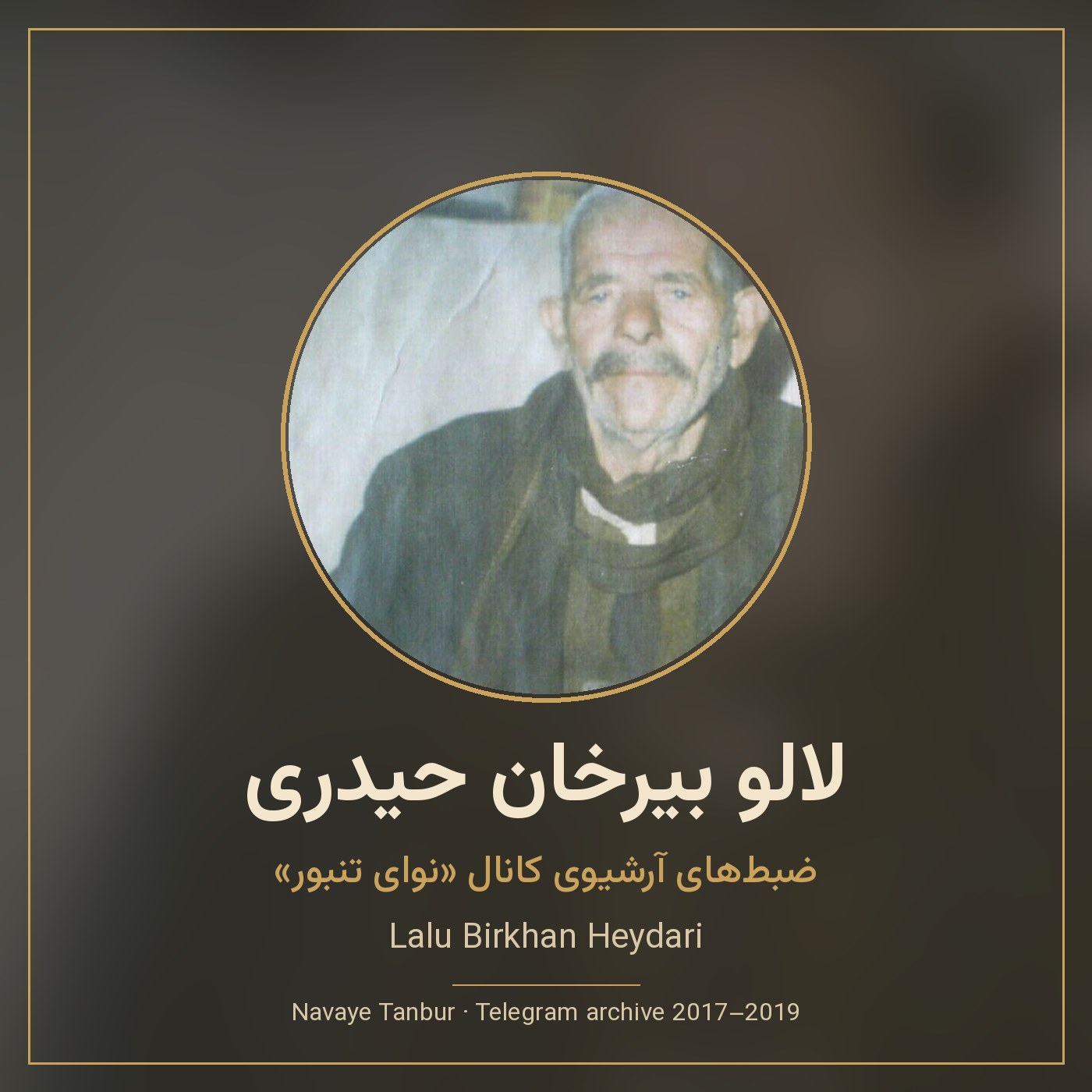 Maqam Bariyeh · Recordings of Lalu Birkhan Heydari from the Navaye Tanbur channelPerformer
Show all 23
- Maqam Davaleh · Recordings of Darvish Alimir Darvishi from the Navaye Tanbur channelPerformer
- Maqam Davaleh · Recordings of Darvish Alimir Darvishi from the Navaye Tanbur channelPerformer
- Maqam Gel va Dara · Recordings of Darvish Alimir Darvishi from the Navaye Tanbur channelPerformer
- Maqam Gel va Dara · Recordings of Darvish Alimir Darvishi from the Navaye Tanbur channelPerformer
- Maqam Gel va Dara · Recordings of Darvish Alimir Darvishi from the Navaye Tanbur channelPerformer
- Maqam Ilbegi · Recordings of Darvish Alimir Darvishi from the Navaye Tanbur channelPerformer
- Maqam Rezhyan Dalahu · Recordings of Darvish Alimir Darvishi from the Navaye Tanbur channelPerformer
- Maqam Sar Tarz · Recordings of Darvish Alimir Darvishi from the Navaye Tanbur channelPerformer
- Maqam Seyed Khamushi 1 · Recordings of Darvish Alimir Darvishi from the Navaye Tanbur channelPerformer
- Maqam Sheikh Amiri prelude (Pishravi) · Recordings of Darvish Alimir Darvishi from the Navaye Tanbur channelPerformer
- Maqam Soltan-e Dine 1 · Recordings of Darvish Alimir Darvishi from the Navaye Tanbur channelPerformer
- Maqam Tarz-e Yari · Recordings of Darvish Alimir Darvishi from the Navaye Tanbur channelPerformer
- Maqam Tarz-e Yari · Recordings of Darvish Alimir Darvishi from the Navaye Tanbur channelPerformer
- Maqam Yar Dida va Kani, Benyamin Pira · Recordings of Darvish Alimir Darvishi from the Navaye Tanbur channelPerformer
- Maqams Gian Khwajay Gholaman and Ey Seyed Mohammad · Recordings of Darvish Alimir Darvishi from the Navaye Tanbur channelPerformer
- Maqams Shah Khoshini and Baba Taheri · Recordings of Darvish Alimir Darvishi from the Navaye Tanbur channelPerformer
- Recordings of Darvish Alimir Darvishi from the Navaye Tanbur channelArtist