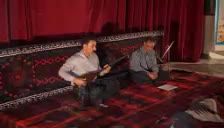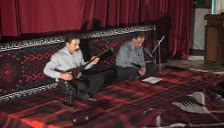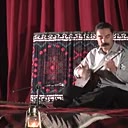
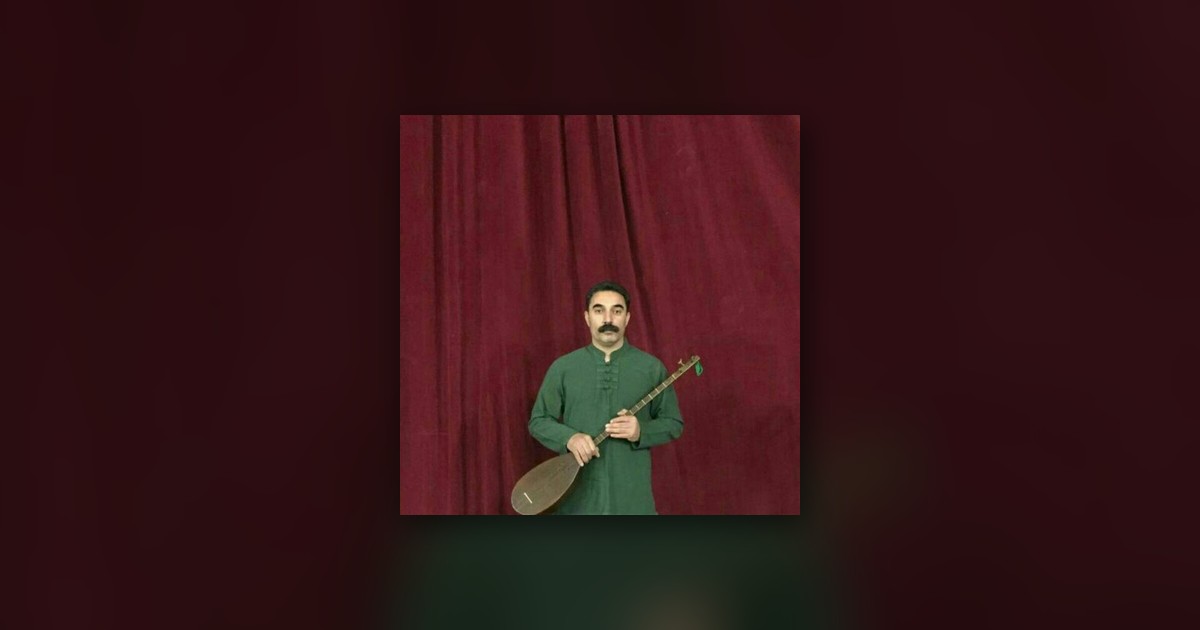
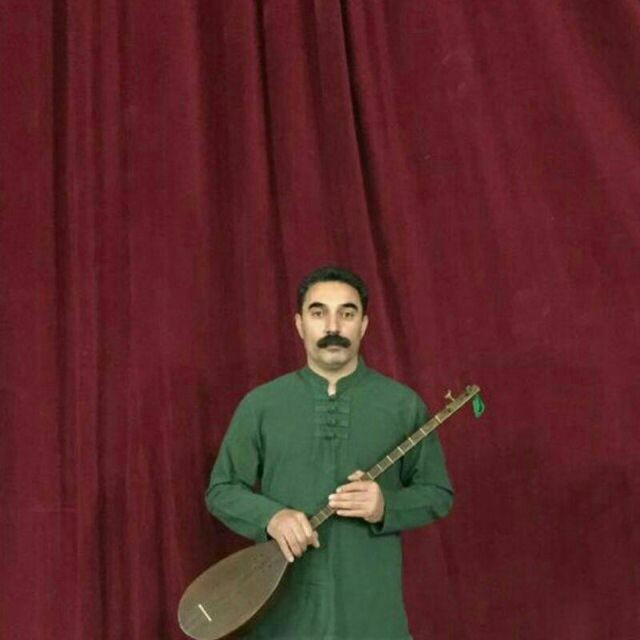
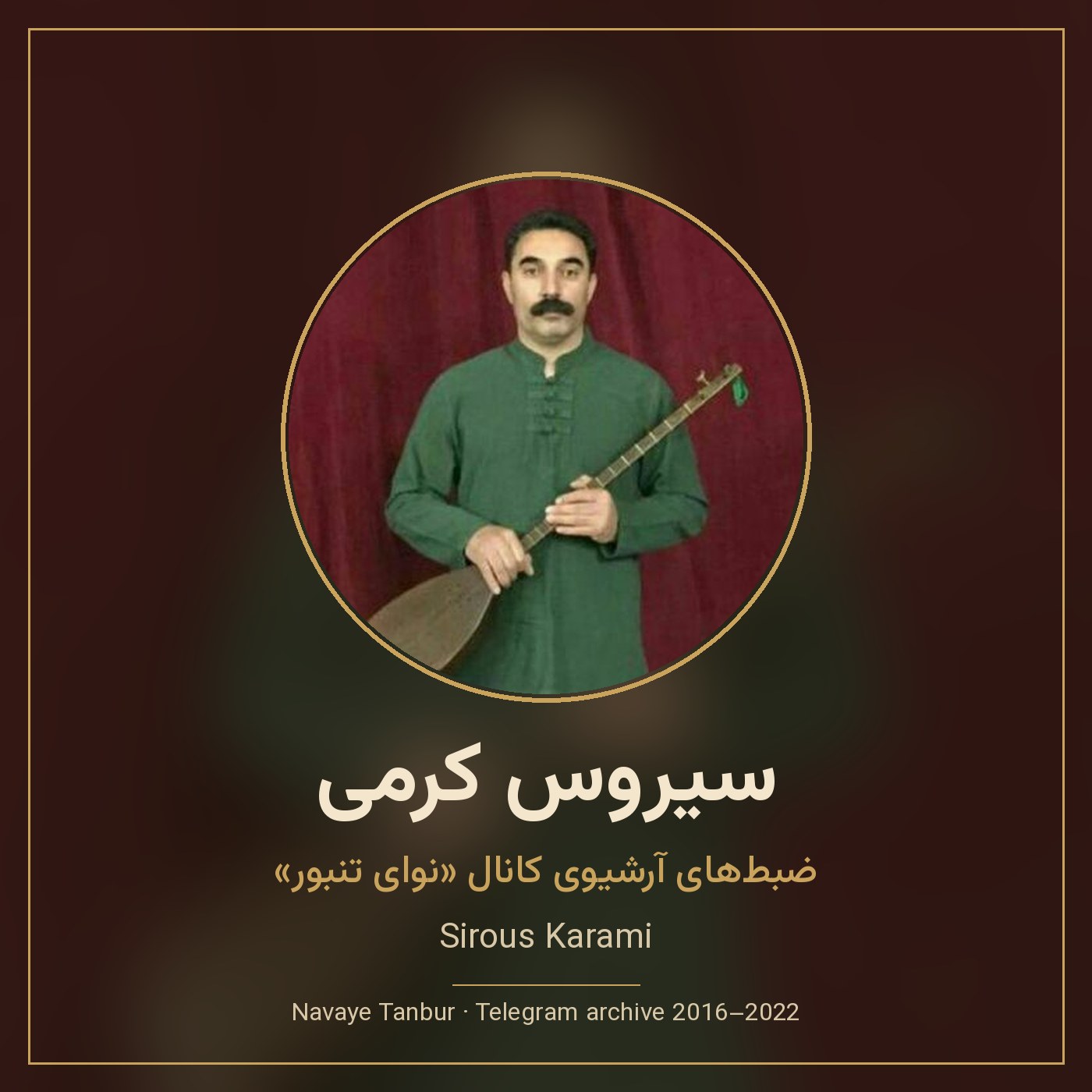
Sirous Karami
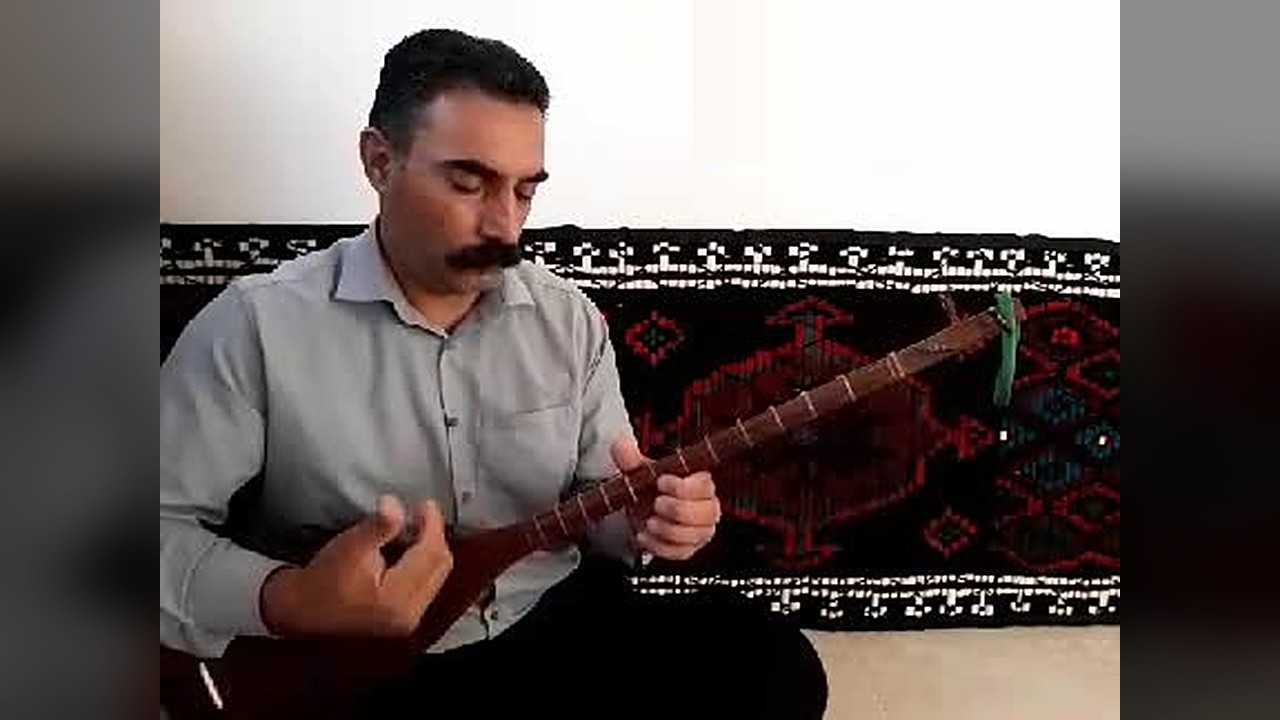
Tanbur player, kalam singer and teacher
b. 1974/75Sirous Karami, son of the esteemed Mr Zafar Karami, was born in 1353 SH (1974/75) in the village of Changar in the county of Eslamabad-e Gharb.
His esteemed father was one of the outstanding maqam masters (maqam: a traditional melodic piece or mode of the tanbur) of the 1340s SH (the 1960s) and one of those who sang kalam (the sacred hymns of the Yarsan) together with Seyed Vali Hosseini himself. In 1354 SH (1975/76), at the age of 35, he died in a car accident and went to meet God.
Although Sirous was only about eight months old at the time and the only surviving male of the family, the loss of a caring and devout father who might have encouraged him on this path never affected his inclination and resolve to learn the tanbur maqams and kalam singing. Even in early childhood, at two or three, the beautiful sound of kalam was familiar to him, and he would hum it to himself in his childish language – so that one may say that the longing to learn kalam and the tanbur maqams was clearly present in his subconscious from his earliest years.
Then, at the age of ten, with the support and encouragement of Darvish Ali Mohammad Salimi – a friend of his father's who played a very important role in his upbringing and support, and an incomparable master of tanbur playing and kalam singing – he learned the manner and style of tanbur playing and kalam singing.
Because of the heavy responsibility of heading the family, he could not continue his education beyond the high-school diploma, and so he resolved to teach his art of tanbur playing to those interested in this style.
For this reason, in 1375 SH (1996/97), after obtaining a licence to teach the tanbur from the Office of Culture and Islamic Guidance (Ershad), he began teaching this sacred instrument to its lovers and followers at the al-Ghadir cultural complex. After a few years, however, a disagreement arose when the officials in charge asked him to teach songs of their own liking, which ran counter to his commitment to teach exclusively the authentic maqams of Guran. This led to the closure of the tanbur class.
After this episode he asked many cultural and artistic bodies, again and again, to cooperate in teaching the tanbur and in officially recognising this art form, but unfortunately each time he met with opposition and obstruction from some officials. Yet this never shook his firm resolve to reach his goal – teaching and promoting this art form and encouraging enthusiasts to learn the sacred tanbur and its authentic maqams – and he kept up his efforts.
In 1381 SH (2002/03), at the express wish and recommendation of Agha Seyed Nasreddin Heydari himself, he was charged with pursuing the tanbur maqams. As he did not yet fully master the maqams at that time, he resolved to carry out this delicate task completely and worthily, and so decided to complete his maqams using the works left behind by Seyed Vali Hosseini, who was no longer alive. Over two years, concentrating on the essential framework of Seyed Vali Hosseini's style of tanbur playing and kalam singing, he finally completed his maqams in exactly Seyed Vali's style of pronunciation and playing.
Once his tanbur maqams and kalam singing were complete, a research board on Iranian music concerned with the Yarsan maqams visited his home on behalf of Agha Seyed Nasreddin himself. In the examination that followed he performed, in two sessions, the 72 principal tanbur maqams and a number of ancient maqams, with Darvish Ali Mohammad and Vali Salimi singing along. Through this accomplished and successful performance, and with the board's favourable opinion and votes, he was able to take an effective step in the growth and spread of the authentic Yarsan maqams.
It is worth mentioning that this lasting work, which was later also approved by the late Darvish Alimir Darvishi, has now been added to the treasury of Iran's national music together with other valuable and precious works by Taher Yarveysi, Seyed Teymour Mehrabi and other eminent masters.
It should also be said that in studying, learning, understanding, interpreting and drawing conclusions from the precious teachings of the daftars (the Yarsan sacred books), he benefited from the company of Darvish Alimir Darvishi and Darvish Ali Mirza Nazari.
In 1382 SH (2003/04) Mr Karami wrote a book entitled Dol Dalan, an introduction to the general concepts of Yarsan philosophy, which unfortunately, for various reasons, has not yet been published.
Throughout his life, despite the opposition and obstacles he encountered, he has spared no effort or help in spreading the tanbur and its authentic maqams and securing their recognition in the cultural and artistic sphere for the lovers and enthusiasts of this art form, and he has devoted all his energy and determination to making the knowledge he gathered over 35 years available to the lovers and devotees of this sacred instrument. He currently teaches the tanbur to students and lovers of this sacred style at a private music school.
His maqam lessons of 2016–2017 are collected in the course Tanbur Maqam Lessons with Sirous Karami.
Source: Telegram channel “Navaye Tanbur”, 17 January 2017; written by Seyed Hekmat Hosseini; quoting the channel “Yaran-e Dalahu”.
Music
 Maqam Ali Ali · Recordings of Sirous Karami from the Navaye Tanbur channelPerformer
- Maqam Baba Nawusi 1 · Recordings of Sirous Karami from the Navaye Tanbur channelPerformer
- Maqam Baba Taheri · Recordings of Sirous Karami from the Navaye Tanbur channelPerformer
- Maqam Baba Taheri · Recordings of Sirous Karami from the Navaye Tanbur channelPerformer
- Maqam Davud Na Kura (Kowsar) · Recordings of Sirous Karami from the Navaye Tanbur channelPerformer
- Maqam Do Vala · Recordings of Sirous Karami from the Navaye Tanbur channelPerformer
Show all 37
- Maqam Ey Dust Ni Dam Da · Recordings of Sirous Karami from the Navaye Tanbur channelPerformer
- Maqam Ey Lami va Lami · Recordings of Sirous Karami from the Navaye Tanbur channelPerformer
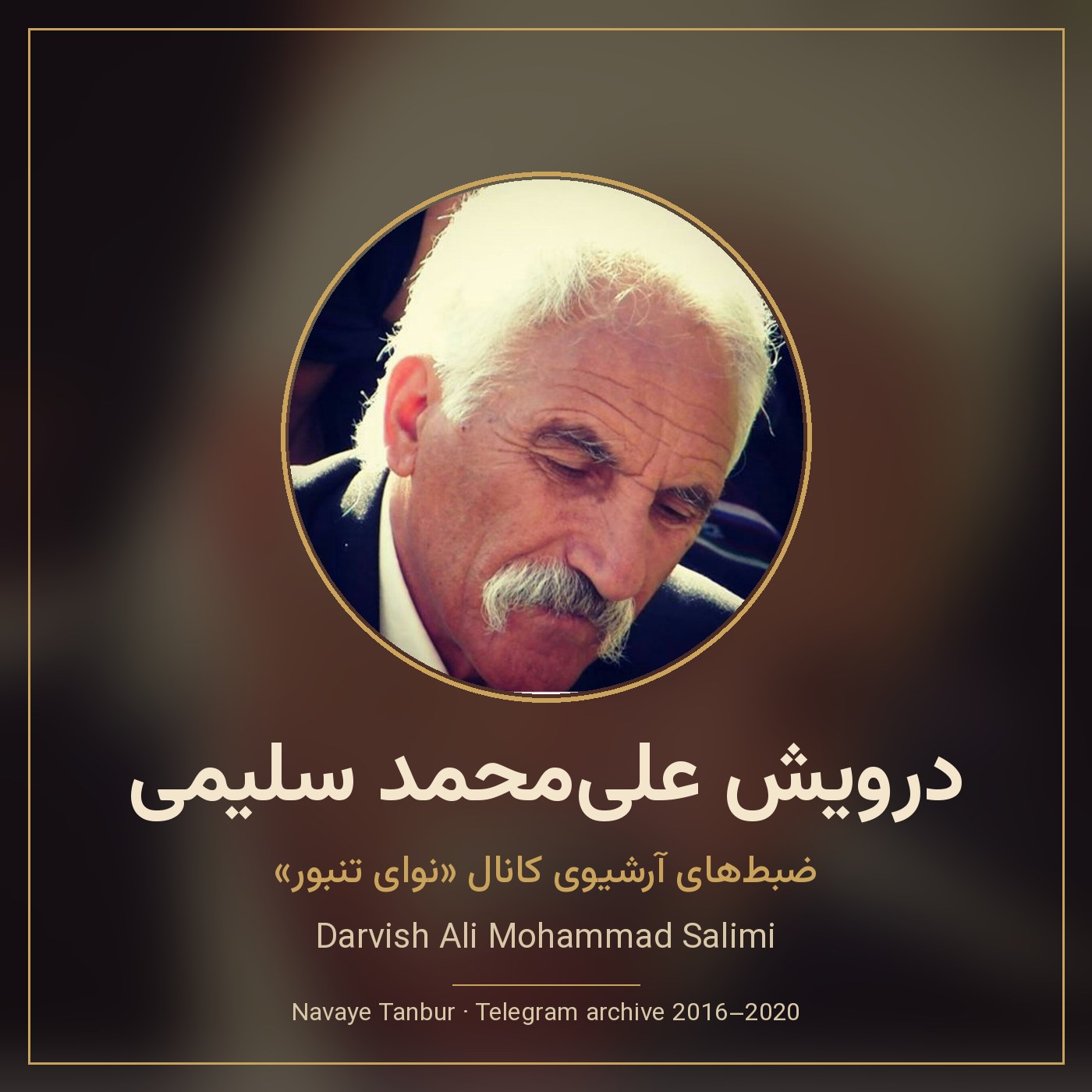 Maqam Hagh Yari · Recordings of Darvish Ali Mohammad Salimi from the Navaye Tanbur channelPerformer
- Maqam Hejrani · Recordings of Sirous Karami from the Navaye Tanbur channelPerformer
- Maqam Hejrani · Recordings of Sirous Karami from the Navaye Tanbur channelPerformer · تنبور
- Maqam Hey Dus · Recordings of Sirous Karami from the Navaye Tanbur channelPerformer
- Maqam Hey Gian (fourth type, part two) · Recordings of Sirous Karami from the Navaye Tanbur channelPerformer
- Maqam Hey Gian (second type) · Recordings of Sirous Karami from the Navaye Tanbur channelPerformer
- Maqam Jam Jam Shay Barza Mal · Recordings of Sirous Karami from the Navaye Tanbur channelPerformer
- Maqam Jam Nian Dusan Avyana · Recordings of Sirous Karami from the Navaye Tanbur channelPerformer
- Maqam Khas Bazhana · Recordings of Sirous Karami from the Navaye Tanbur channelPerformer
- Maqam Pavamuri · Recordings of Sirous Karami from the Navaye Tanbur channelPerformer · تنبور
- Maqam Pavamuri · Recordings of Sirous Karami from the Navaye Tanbur channelPerformer
- Maqam Qatar · Recordings of Sirous Karami from the Navaye Tanbur channelPerformer
- Maqam Sar Kheyvi · Recordings of Sirous Karami from the Navaye Tanbur channelPerformer
- Maqam Sarukhani · Recordings of Sirous Karami from the Navaye Tanbur channelPerformer
- Maqam Sarukhani · Recordings of Sirous Karami from the Navaye Tanbur channelPerformer
- Maqam Seyed Khamushi · Recordings of Sirous Karami from the Navaye Tanbur channelPerformer
- Maqam Seyed Khamushi (third type) · Recordings of Sirous Karami from the Navaye Tanbur channelPerformer
- Maqam Shay Hawramani · Recordings of Sirous Karami from the Navaye Tanbur channelPerformer
- Maqam Shay Hawramani · Recordings of Sirous Karami from the Navaye Tanbur channelPerformer
- Maqam Soltan-e Dine 1 · Recordings of Sirous Karami from the Navaye Tanbur channelPerformer
- Maqam Soltan-e Dine 2 · Recordings of Sirous Karami from the Navaye Tanbur channelPerformer
- Maqam Soltan-e Dine 3 · Recordings of Sirous Karami from the Navaye Tanbur channelPerformer
- Maqam Yar Davud · Recordings of Sirous Karami from the Navaye Tanbur channelPerformer
- Maqam Yar Dida va Kani (Khavandkari) · Recordings of Sirous Karami from the Navaye Tanbur channelPerformer
- Maqam Yar Dida va Kani, Shah Meyu · Recordings of Sirous Karami from the Navaye Tanbur channelPerformer
- Maqam Yaran Jam Nian · Recordings of Sirous Karami from the Navaye Tanbur channelPerformer
- Maqams Qatar and Gharibi · Recordings of Sirous Karami from the Navaye Tanbur channelPerformer · تنبور
- Maqams Sar Tarz, Davaleh and Sarukhani · Recordings of Sirous Karami from the Navaye Tanbur channelPerformer · تنبور
- Recordings of Sirous Karami from the Navaye Tanbur channelArtist