Berarkhas Khaledpour
Tanbur player from Zardeh and Dalahu
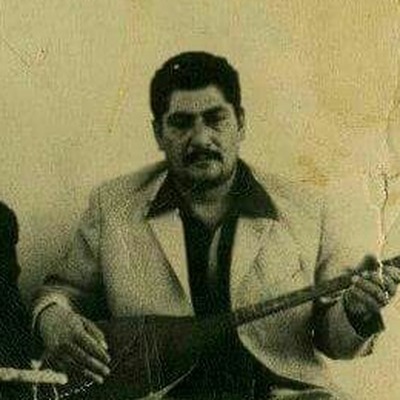
b. 1933/34Berarkhas Khaledpour was born in 1312 SH (1933/34). He lived in the village of Zardeh until the age of 16 and has since lived in Sarpol-e Zahab, Kermanshah, though he has kept up his ties with his home region (Zardeh and Dalahu).
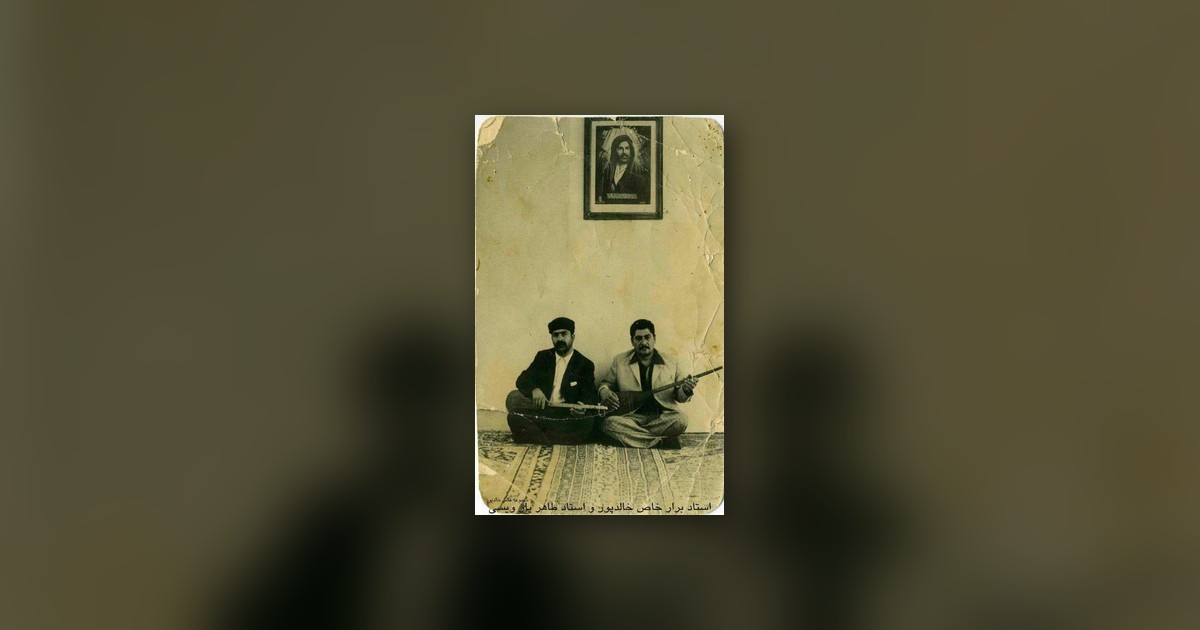
He played the tanbur from childhood. When he was 13, the great tanbur master, the late Kadara, moved to that region and settled there. Kadara asked him to play the tanbur and approved of his playing. Berarkhas was also a friend and companion of Badrkhan Heydari (Lalu Birkhan); in gatherings of friends and companions he would always play the tanbur for Lalu Birkhan, a singer of tanbur maqams (traditional melodic pieces or modes of the tanbur). Lalu Birkhan (lalu means “maternal uncle”) liked the way he played and always sang maqams to his instrument.
Taher Yarveysi, too, is an old friend of his. He also learned the maqam Sartarz and one of the variants of the maqam “Hey Gyan” from Kadara, in a manner peculiar to him that no one else has played to this day (on the Sartarz and Hey Gyan maqams: according to others).
His son Kiumars, born in 1338 SH (1959/60), is a good player and maqam singer. In 1357 SH (1978/79) he worked with Kermanshah radio and television, and several songs from that time sung by Behrouz Karimi, including “Vavyar” and “Be ruz o shab man sheyda”, are his.
The maqam Sartarz was composed by His Holiness Seyed Brakeh Heydari, just as the maqams “Gol-o Dareh” and “Gol-o Khak” were composed by Seyed Darvish, the pir (spiritual elder) of the Seyed Darvishi family.
By the leave, grace and kindness of Agha Seyed Shamseddin Heydari, a great grace was bestowed on Kadara and he brought all the tanbur maqams back to life. Then, at the command of Agha Seyed Shamseddin Heydari, he passed on the grace he had received from the Agha to the previous generation of the tanbur and its maqams: masters and figures such as Ka Bashar Bazhuei (an incomparable master of the daftar – the Yarsan sacred books – and of kalam, the sacred hymns of the Yarsan), Seyed Farrokh Gahvarei, Darvish Alimir Darvishi, Hasan Kharabati, Seyed Vali Hosseini and many others served Agha Seyed Shamseddin at the Heydari tekyeh (gathering house), under the grace and favour of the Agha and the tekyeh, and learned the tanbur maqams and kalam there. In short, all that we have, we have from the Heydari tekyeh.
Source: Telegram channel “Navaye Tanbur”, 23 February 2017; written by Alireza Abbasi; with thanks to Amir Abbasi.