People
Leading Yarsan kalam singer
1944/45–2024
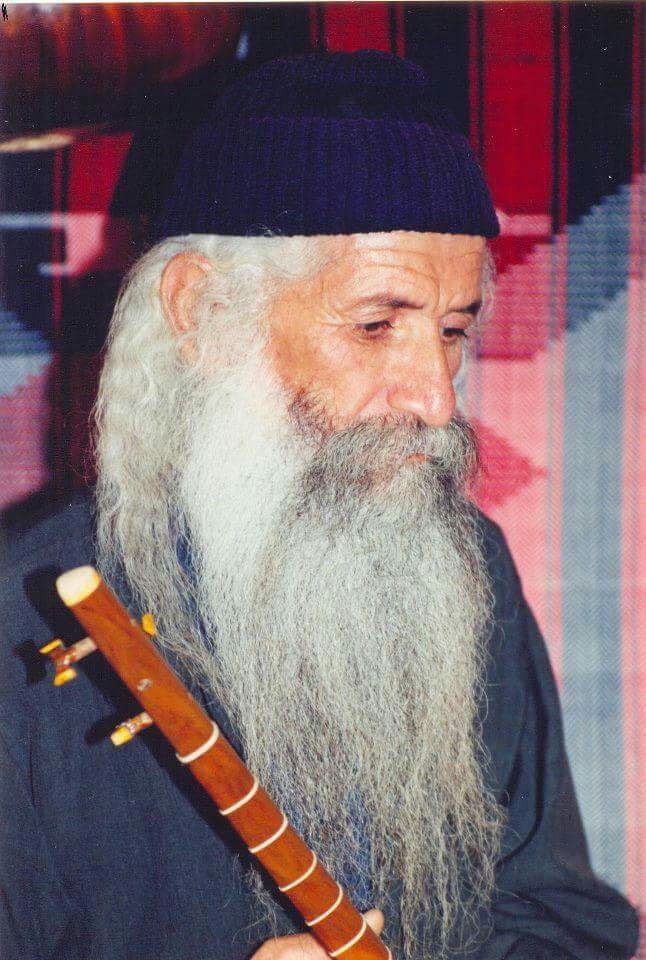
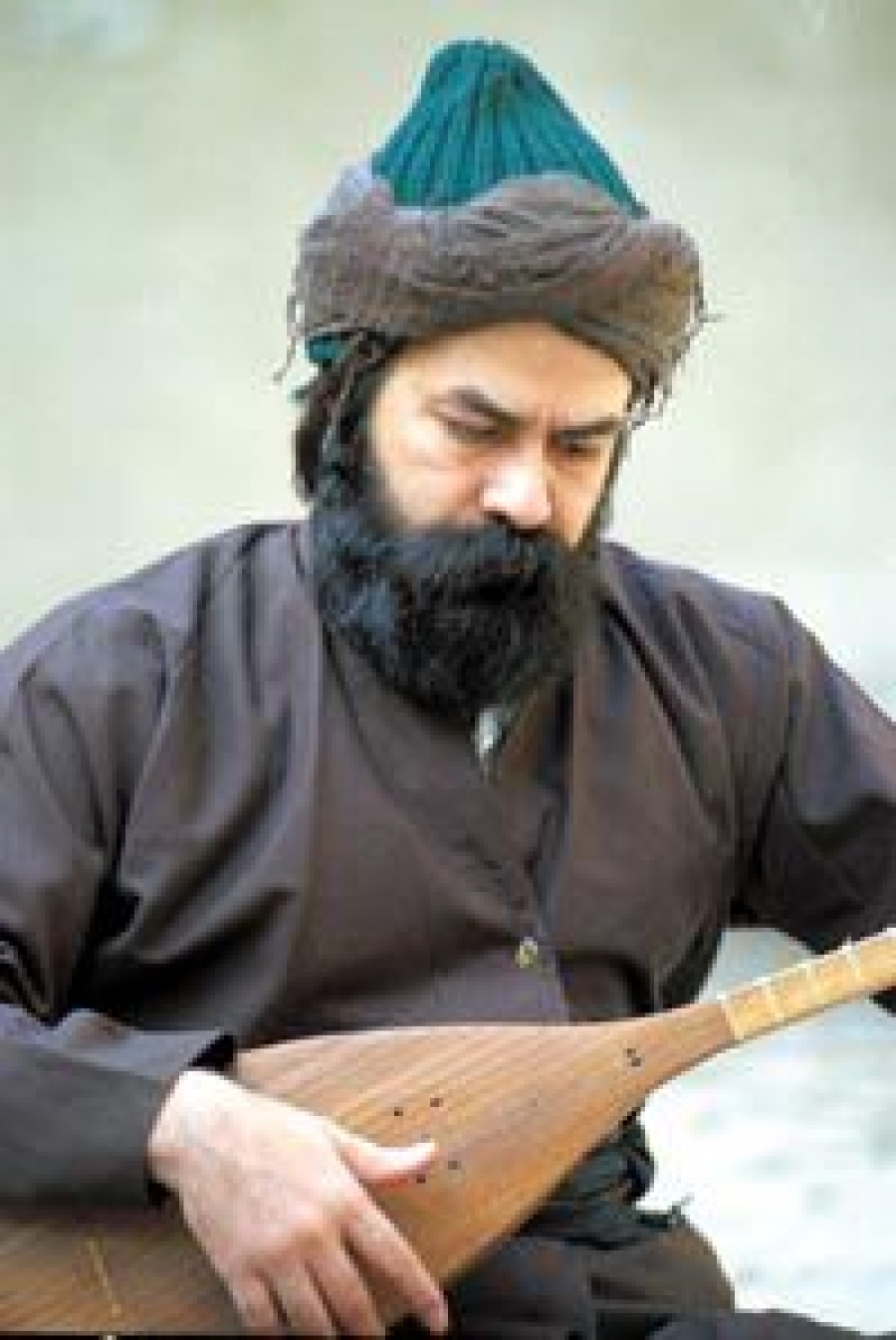
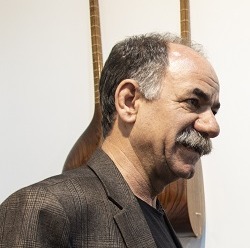
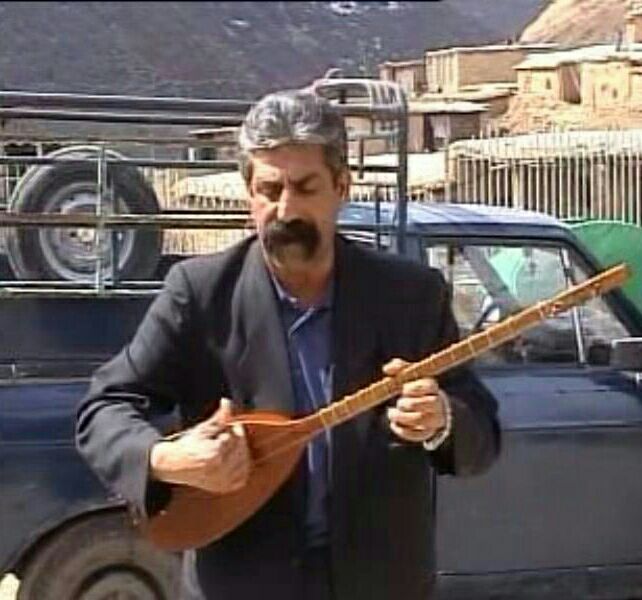
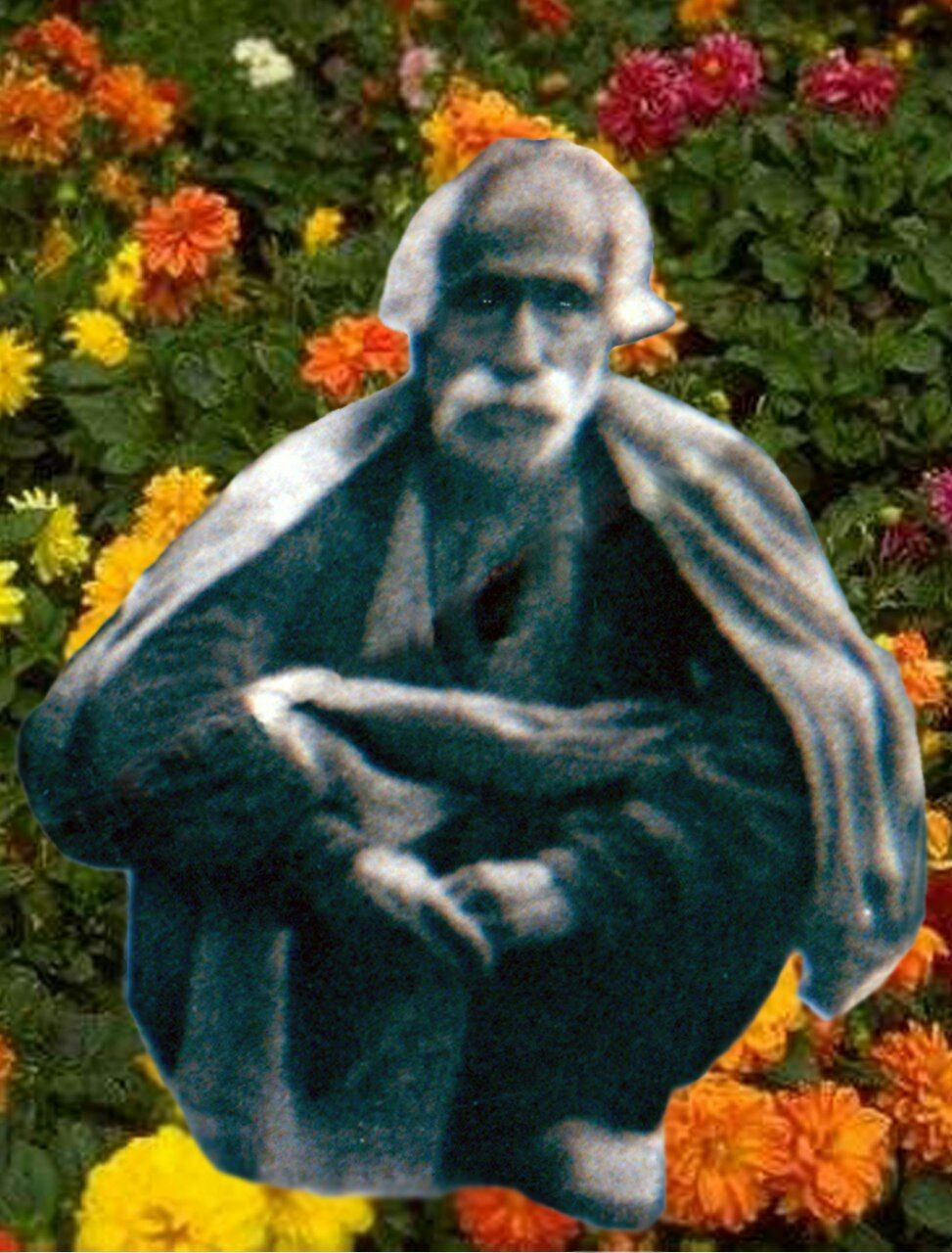
Another of the great masters is Darvish Changiz Abdipour, who was born in 1323 SH (1944/45) in Kerend (today Dalahu county) into a devout, community-minded and artistic family. His father (Baba Morad) was one of the great masters of the techniques and art of handicrafts, one of the renowned blacksmiths of that region. His maternal grandfather was a master of kalam (the sacred hymns of the Yarsan), daftar recitation (daftar: the Yarsan sacred books) and tanbur playing, who most of the time served in the circle of Agha Seyed Rostam and at times recited daftar and kalam for his children. This kindled fervour and passion in Darvish Changiz Abdipour, and he took up learning kalam, daftar and tanbur under Aziz Kakaei of Tutshami, a student of the late Kadara. Darvish Changiz was the first high-school graduate (diploma holder) of the town of Kerend. At Razi High School in Kermanshah he received the “Engineer Zanganeh” scholarship, and after his service in the Literacy Corps (Sepah-e Danesh) he became head of Bank Saderat in the cities of western Iran. Some time later, following an inner transformation, he gave up the bank post and turned to blacksmithing, his father's trade. He is one of the great kalam singers of the Yarsan; at the feasts of Khavandkar (the Lord) and at Yarsan ceremonies his pleasing voice fills people's hearts and souls with fervour for the Truth. Death Darvish Changiz Abdipour died in Farvardin 1403 SH (March/April 2024). His funeral procession set out on Friday, 17 Farvardin 1403 (5 April 2024), from his home in Bagh-e Nader to the cemetery of the Shova quarter, and Agha Seyed Nasreddin Heydari, the leader of the Yarsan, issued a message of condolence. After his death the “Navaye Tanbur” channel reposted part of his interview in the documentary “Avaz-e Khoda” (The Song of God) by Iran International. Source: Telegram channel “Navaye Tanbur”, 1 June 2017 (written by Alireza Abbasi Gurajubi) and 4–12 April 2024.
Tanbur player, Moshtagh Tanbur Ensemble
Moshtagh Tanbur Ensemble
Abed Khaledian is a tanbur player and a member of the Moshtagh Tanbur Ensemble in Sanandaj, led by Jalil Rahmati, and played tanbur in “Hoo Madadi” in memory of Mohammad-Reza Lotfi (October 2025). Source: the closing credits of the “Hoo Madadi” video on the Moshtagh Tanbur Ensemble’s YouTube channel. This page is short and will be expanded.
Tanbur player, Guran Tanbur Players
Guran Tanbur Players
Afsaneh Hamidi is a tanbur player and a member of the Guran Tanbur Players, led by Jahanbakhsh Rostami in Shiraz, and played tanbur with the ensemble in the song “Parvaz-e Ruh” (2025) and the concert “Sokhan-e No” (2025). Sources: the description of the “Parvaz-e Ruh” video on Jahanbakhsh Rostami’s YouTube channel and the ensemble’s Instagram page. This page is short and will be expanded.
Tanbur player, maker and transcriber
b. 1983/84
Afshin Saebnejad (born 1983/84 in Tehran) is a tanbur player, a maker of the tanbur and other plucked string instruments, and a music transcriber. The tanburs he builds under the “Saeb” mark are known for a tone well suited to ensemble playing and the stage. He belongs to the new generation of tanbur musicians. First encounter with the tanbur As a teenager Saebnejad played daf at the Pir-Bastam khaneqah on Dowlat Street in Tehran, and it was there that the sound of the tanbur captivated him. He learned daf at the khaneqah and later, after hearing a Radio Payam announcement for a workshop by Farhad Andalibi, took specialised daf training at the Shafagh cultural centre. At the khaneqah he met leading tanbur players, among them Darvish Amir Hayati, who deepened his interest. Above all he admired the playing of Davood Azizi, a student of Golnazar Azizi, though he had little opportunity to work with him. Teachers Abradat Kakavand, brother of Ramin Kakavand: his first tanbur lessons. Heydar Kaki: the Dalahu and Guran schools of tanbur. Saebnejad was one of Heydar Kaki’s first students in Tehran. Ali Akbar Moradi: maqams and kalam. Hamidreza Fallahi: his start in tanbur making, which he then pursued professionally. Transcriptions Aram-e Jan: pieces by Masoud Arzanlou in notation for students. Tah-razha-ye bastani-ye tanbur (The ancient tarz of the tanbur): transcribed together with Heydar Kaki. Performing He plays mainly with the Bang-e Nowruz ensemble led by Masoud Arzanlou, and played tanbur on the album Hamaseh-ye Dad. Source: his profile on tanbur-music.ir.
Tanbur player, Hafez Tanbur Players
Hafez Tanbur Players
Amirhossein Aghajani is a tanbur player and a member of the Hafez Tanbur Players. In 2026 (1405 SH) they played tanbur in a work dedicated to Rumi and Shams-e Tabrizi, composed and sung by Mirfarsad Maleknia and conducted by Amin Darabi. Source: Amin Darabi’s YouTube channel (@amindarabi4151).
Tanbur and daf player, composer, leader of the Zhuran ensemble
b. 1983
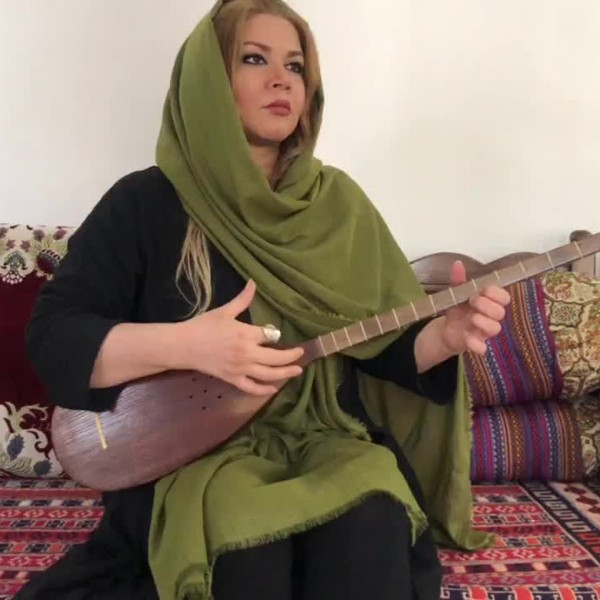
Asieh Ahmadi is a player of the tanbur, daf and dayereh and a composer. According to the English Wikipedia she was born in Tehran on 5 June 1983, has been active in music since 2000, has been a member of the Hannaneh and Toranj ensembles, and has recorded with artists such as Abdolhossein Mokhtabad, Naser Razazi, Pari Zanganeh and Simin Ghanem. The daf player Sara Ahmadi is her sister. She is the composer and leader of the Zhuran ensemble and has arranged many of her pieces herself, playing tanbur, daf, kuzeh and bendir on them, among them “Shabnam”, “Niaz”, “Boshra” (broadcast, according to the channel, on the programme “Rasadkhaneh Ava Star”), “Neshan-e Eshgh”, “Najva”, “Ariel” (dedicated to working children), “Shmuel”, “Irana”, “Aghaz-e Parvaz”, “Shogh-e Baran” and “Labkhand-e Bahar”. On “Shogh-e Baran” she is joined by Morteza Fathi (kamancheh) and her sisters Sara (daf), Bita (kuzeh), Mona (bendir) and Mina Ahmadi (bass tar). She teaches group classes in daf and tanbur, and since 2021 the channel “Navaye Tanbur” has posted her tanbur solos and improvisations. Source: Telegram channel “Navaye Tanbur”, December 2019 to October 2026; English Wikipedia (Asieh Ahmadi). Photo from one of her solo videos on the channel.
Tanbur player
Seyed Ghodrat Alavi is a tanbur player who appears in several of Majid Zarei’s group performances, including maqam Bariya, the maqams played at the new year 1400 (2021) and “Hezar-o yek shun”. Source: the video descriptions on Majid Zarei’s YouTube channel.
Virtuoso tanbur player
b. 1906/07
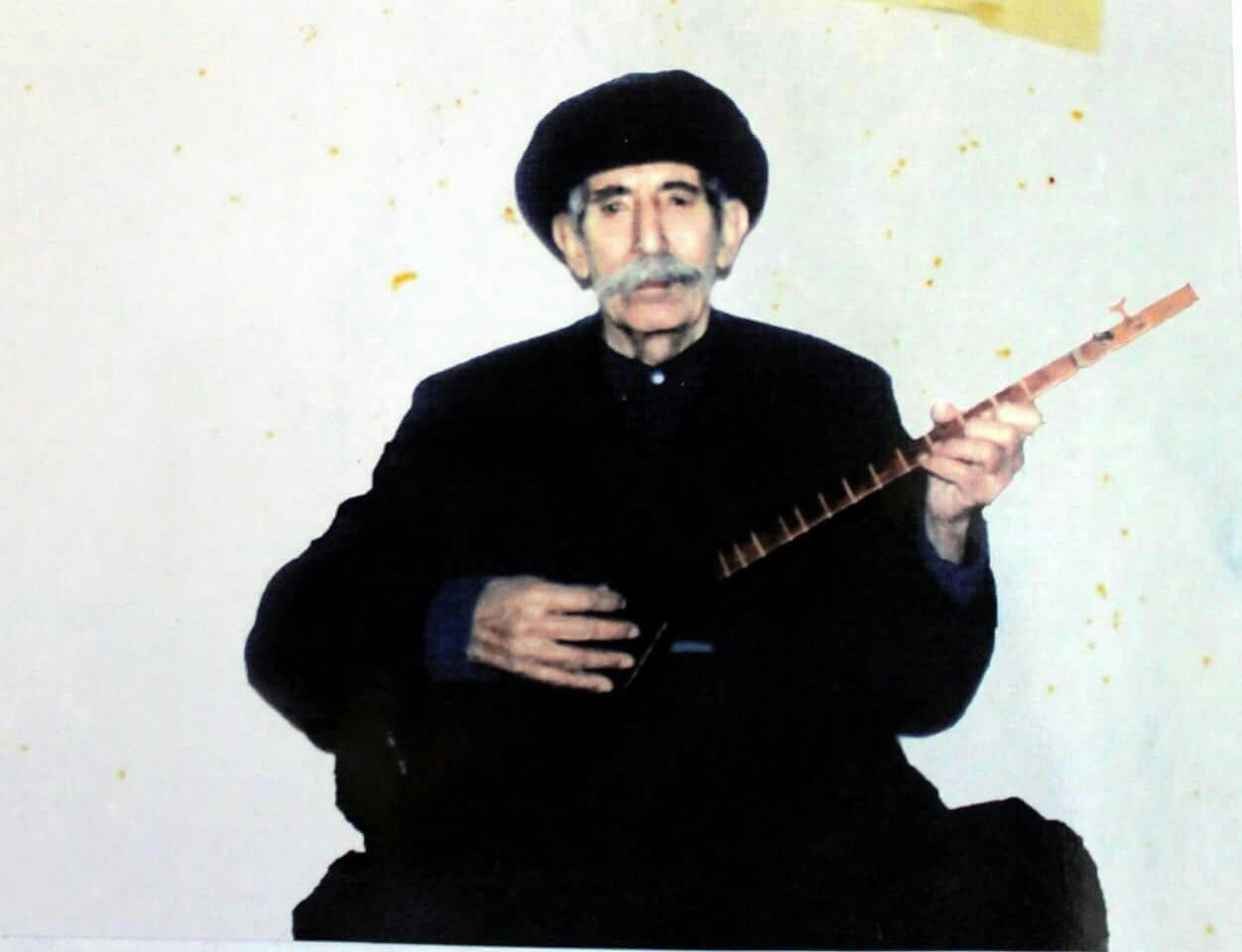
Seyed Mahmoud Alavi, son of Seyed Mirza and grandson of Seyed Niaz, from the line of Seyed Khiyal, a descendant of Seyed Qamam, was born in 1285 SH (1906/07) in the town of Gahvareh. Like Seyed Vali, he had the honour of attending the gatherings of Agha Seyed Shamseddin Heydari and benefited from his teaching. Seyed Mahmoud was one of the most virtuosic and technically accomplished tanbur players; when one listens to the few recordings he left, one is so struck by the strength of his fingers and his playing technique that it seems as if he had lived in our own time. He played the tanbur with such finesse that Agha Seyed Shamseddin is reported to have said of him and Seyed Vali: “Seyed Mahmoud plays the tanbur in the most beautiful way possible, and Seyed Vali plays the maqams [traditional melodic pieces of the tanbur] of the kalam [the sacred hymns of the Yarsan] in the best way possible.” Seyed Mahmoud Alavi also studied with the tanbur masters, the Kakis of Gurehjub. He trained great pupils such as Taher Yarveysi and Ali Akbar Moradi. His brother Seyed Esmaeil Alavi (1305–1378 SH; 1926/27–1999/2000) and his nephew Seyed Bahram were also great tanbur players and maqam masters. Source: Telegram channel “Navaye Tanbur”, 13 November 2016 and 13 April 2017.
Tanbur player
Guran Tanbur Players
Ali Barati is a tanbur player. In October 2025 they played tanbur with Arian Sheikhi in an excerpt of the folk piece “Ey dad o bidad” arranged by Davood Azad, recorded with four tanburs, kamancheh and daf at the Mah-Soltan mansion in Shiraz. Ali Barati also is a member of the Guran Tanbur Players, led by Jahanbakhsh Rostami in Shiraz, and played tanbur with the ensemble in the song “Parvaz-e Ruh” (2025) and the concert “Sokhan-e No” (2025). Source: the description of the video “Ey dad o bidad” on Arian Sheikhi’s YouTube channel. This page is short and will be expanded. For the Guran ensemble: the description of the “Parvaz-e Ruh” video.
Member of the Khorasan Tanbur Players
Khorasan Tanbur Players ensemble
Ali Khojasteh is a member of the Khorasan Tanbur Players ensemble led by Ebrahim Tehranipour. This page is short and will be expanded.
Composer, tanbur player, singer and writer
b. 1987
Jami Grand Tanbur Ensemble
Reza Aliabadi, a player, composer, researcher and soloist of traditional Iranian music, was born on 29 September 1987 in Tehran. He became acquainted with maqam music (built on maqams, the traditional melodic pieces of the tanbur repertoire) and the tanbur in early childhood: his father’s friendship with great masters such as the late Seyed Mansour Yari Shahebrahimi, Darvish Javanmir Manhuei Gurjuei and Seyed Ahmad Hosseini paved the way for his familiarity with the authentic maqams and melodies of the tanbur. Reza Aliabadi’s intense love of music led him to begin learning the tanbur at the age of seven. In his interviews he names Master Seyed Ahmad Hosseini (the maqams of Sahneh) and Darvish Javanmir Manhuei Gurjuei (the maqams of Guran) as the most influential teachers of his artistic life. After learning the maqam repertoire, Aliabadi pursued classical Persian music academically in order to deepen his knowledge, and studied with Master Majid Latifi Seresht. After earning a bachelor’s degree in architecture, his strong interest in music research led him to enter the Faculty of Music of the University of Culture and Art, where he received a bachelor’s degree in the tar (a long-necked Persian lute). During this period great masters such as the late Mohammad Reza Lotfi and Amir Sharifi were his mentors. Reza Aliabadi’s research led him on extensive journeys to get to know the different schools of the tanbur. He trained with renowned masters such as Keykhosrow Pournazeri, Seyed Khalil Alinejad, Taher Yarveysi and Seyed Khayal and benefited from their knowledge and experience. The results of his research and teaching have been published in written works such as: Nazm ta Maqam (“From Order to Maqam”) Maqam-haye Bastani-ye Tanbur (“The Ancient Maqams of the Tanbur”) Chehel Tamrin Baraye Angosht-gozari (“Forty Fingering Exercises”) These have been warmly received by the music community. Reza Aliabadi is the first player to have taken G as the open-string note of the tanbur in his works. Alongside his research and writing, a number of his artistic works have been released, including: the album Tanideh dar Seda (“Woven into Sound”) the album Nazm-haye Tanbur (“Orders of the Tanbur”) the album Form-haye Bi-payan (“Endless Forms”) In 2009 Reza Aliabadi founded the Jami Ensemble and, as its composer and director, gave numerous concerts at Roudaki Hall, Milad Tower, Saadabad Palace, the Niavaran Cultural Center and other prestigious venues. Teaching music has always been one of his main concerns: he has taught the tanbur for more than 17 years and has given various courses at universities and respected institutions, including Tarbiat Modares University. The Aliabadi Academy is now officially active, and more than 80 students are learning traditional Iranian instruments there. Reza Aliabadi is an artist who, by combining research, performance and teaching, has made an important contribution to the preservation and promotion of tanbur music and of Iran’s mystical music, and who constantly strives for the creation of new and lasting works in this time-honoured art. From a long interview with ILNA (republished by Musiceiranian, 2023) From jamkhaneh to city. Aliabadi, who began the tanbur in the 1990s, says the instrument was then played mostly in jamkhanehs and reached the general public in the 2000s. He credits Keykhosrow Pournazeri's Shams ensemble and Seyed Khalil Alinejad's concerts and cassettes in Tehran with much of this urbanisation, and believes public awareness peaked in the 2010s with the help of social media. He sees the tanbur today in a "transition" towards more urban phrasing and forms. Students. In 21 years of teaching he has had several thousand students: in the first decade mostly middle-aged people with mystical leanings, since the 2010s mostly people aged 18 to 35 from every walk of life. For about eleven years he has also taught students in Canada, the USA, Austria, Germany, Sweden, Turkey, the UK, the Netherlands, Norway, Australia, Portugal and Africa. Maqam and piece, ear and notation. He rejects splitting tuition into "maqam playing" and "piece playing" and teaches both, just as he teaches both the Guran and Sahneh styles. He insists on learning by ear and from notation at the same time and sees the lack of music literacy as a serious gap among tanbur teachers. In his view the feeling and tone of a maqam can be notated, provided teaching scores are distinguished from analytical ones, and the dispute between Sahneh and Guran players is mostly about one or two notes, which transcription would put in proportion. He says he transcribed the maqams note by note so that the tanbur can be taught at university and become international. The book "Forty Fingering Exercises for the Tanbur" (2019) "Forty Fingering Exercises for the Tanbur", his second book after "The Ancient Maqams of the Tanbur" and the fruit of thirteen years of teaching, was published by Sorud and launched on 31 Khordad 1398 (21 June 2019) at Rudaki Hall with the Roudaki Foundation and the Iranian Music Association, with talks by Ali-Akbar Safipour, Amir Sharifi, Reza Salehi, Farid Elhami and Kourosh Ghazvineh. It aims at finger strength and coordination between the two hands. The maqam Jelowshahi On the first anniversary of the death of his teacher Seyed Ahmad Hosseini (21 Esfand 1400 / 12 March 2022), Aliabadi released the maqam "Jelowshahi" in his teacher's version – its first studio recording. Source: Musiceiranian (musiceiranian.ir) — رضا علی آبادی: اختلاف تنبورنوازان «صحنه» و «گوران» سر درست نواختن نت هاست; جزئیات یک پژوهش موسیقایی که کتاب شد از زبان رضا علی آبادی; بازنوازی اثر نوازنده فقید تنبور در اولین سالگرد درگذشتش
Composer, tanbur player, singer, instrument maker and writer
1957–2001
Baba Taher ensemble · Shams ensemble
Life and education Seyed Khalil Alinejad was born in 1957 in Sahneh, in Kermanshah province. His father, Seyed Shahmorad Alinejad, was a well-known tanbur player of the region. As a poet he wrote under the pen name "Biqarar" (the Restless). He began learning the tanbur with Seyed Nader Taheri and went on to study the teachings of Seyed Amrollah Shahebrahimi and Darvish Amir Hayati. He later became a student of Master Abedin Khademi and, at the same time, led the ensemble “Tanbur Players of Sahneh”. According to DW Persian, he first learned the tanbur from his father and after two years went on to Seyed Amrollah Shahebrahimi. The same report gives Kermanshah as his birthplace. According to a biography by Kaki Varia Almasi posted on Seyed Khalil's Telegram channel, he learned setar and tar with Seyed Asadollah Shahebrahimi, Ahmad Ebadi and Keykhosrow Pournazeri, and daf with Sufi Nader Naderi and Haj Mahmoud Soroush. In 1996 he graduated in music from the University of Art in Tehran. Artistic career In 1974/75 (1353) Seyed Amrollah Shahebrahimi formed the first tanbur ensemble of Kermanshah with his students, among them Seyed Khalil, Seyed Ghasem Haghighatnejad, Seyed Farrokh Haghighi, Mohammad-Hossein Esfandiari and Masoum Sharbati. Seyed Khalil gave his first concert with this group in 1975/76 (1354) at Rudaki (Vahdat) Hall in Tehran; over several nights the group played old tanbur maqams such as "Jelowshahi", "Baye Baye" and "Khan Amiri". In 1977/78 (1356), after Mazhar Khaleghi became director of Kermanshah radio and television, the provincial broadcaster formed a tanbur orchestra for the first time; Seyed Khalil was one of its seven tanbur players. Seyed Khalil had complete command of the radif, the core repertoire of Iran’s classical (dastgah) music. He learned singing in the school of Mirza Hossein Khademi, the daf (frame drum) with Nader Naderi and the tar with Keykhosrow Pournazeri. His tar and setar playing was close to the schools of Borumand and Yousef Forutan, and he was always known for careful phrasing and expressive feeling. He was also a skilled instrument maker, building tanburs and setars under the mark “Sheyda” and later “Qalandar”. In the 1980s he worked with the Shams Tanbur Ensemble, and his timeless solo on the album Sedaye Sokhan-e Eshgh (“The Sound of Love’s Words”), with vocals by Shahram Nazeri, remains unforgettable. In the 1990s he founded the Baba Taher Ensemble. Its performance at the Religious Arts Conference (1996) was released as Zemzeme-ye Qalandari (“The Qalandar’s Murmur”). Works and legacy Seyed Khalil left behind many ritual and artistic albums, including: Ayin-e Mastan (“The Rite of the Enraptured”) Sana-ye Ali (“In Praise of Ali”) Zemzeme-ye Qalandari (“The Qalandar’s Murmur”) Ayin-e Qalandari (“The Qalandar Rite”) Shokraneh (“Gratitude”), a duet with Hamidreza Khojandi on daf He composed more than forty pieces, among them "Showq-e Vasl", "Hal-e Khunin-delan", "Mozhde-ye Milad", "Dar Vafa-ye Eshgh-e To", "Ali Bud", "Karim-o Lamakan", "Nale-ye Tanbur", "Avaz-e Dohol" and "Ashk-e Parde-dar". As a researcher he also left two lasting written works: Tanbur az Dirbaz ta Konun (“The Tanbur from Ancient Times to Today”), his bachelor’s thesis, University of Art, Tehran, 1996 Resaleh-ye Yari (“A Treatise on Yari”, i.e. the Yarsan faith; written 2000, published 2005), with a selection from the Daftar-e Ahkam-e Saranjam, a Yarsan scripture, and translations of and commentary on ritual kalams, the sacred hymns of the Yarsan Death After many years of artistic work in Iran, Seyed Khalil Alinejad emigrated to Sweden in 2000 and taught music in Gothenburg. On 18 November 2001 he was murdered by unknown persons at the ABF adult-education institute where he taught, and his body was set on fire. According to DW, the attackers wounded him with knife blows and set his classroom on fire; more than twenty years later, the identity of the killer or killers is still unknown. On 5 December 2001 (14 Azar 1380) his funeral procession was held in front of the Vahdat Hall in Tehran; he was then taken to his home region and buried in Sahneh. His death was a great loss for Iran’s music community and for the Yarsan faith. Commemoration and archive Everything in one place: Seyed Khalil Alinejad archive Every year on 27 Aban his friends and followers gather at his grave in Sahneh. The years recorded by his Telegram channel are described in Seyed Khalil Alinejad anniversary (27 Aban). In November 2011 the Shaho Great Iranian Instruments Orchestra under Hamed Saghiri also gave a concert in his honour at Vahdat Hall. His private and informal recordings published on his channel are on Tanburban in three parts: part 1, part 2 and part 3. Photos of him are in Photos of Seyed Khalil Alinejad. Videos of him from the same channel are in Videos of Seyed Khalil Alinejad. Radio interview: the channel published a radio interview with him on mystical music and the tanbur; when and where it was broadcast is not known. It is included, together with a talk, in Seyed Khalil Alinejad – interviews and talks. "A look at Seyed Khalil Alinejad's tanbur playing": a short unsigned note on the channel says his playing must be both heard and watched. The writer compares it to a story: the fingers begin gently and gather speed, as if riders were setting off towards the hills; his strokes on the body of the instrument recall the sound of hooves, and the music rises and falls until the riders vanish on the horizon. DW podcast: In her weekly podcast “Rarely Heard Sounds, from Yesterday to Today” on DW Persian (4 August 2022), Mitra Khalatbari devoted an episode to Seyed Khalil and played “Ayin-e Mastan” with his voice and tanbur. Listen on the DW website Sources for this section: the Telegram channel @SeyedKhalilAlinejad; the biography by Kaki Varia Almasi posted there; Mitra Khalatbari’s report on DW Persian (4 August 2022).
Tanbur player, lead player and singer
b. 1948/49
Yadollah Alqasi was born in 1327 SH (1948/49) in the Gahvareh district. At the age of five or six he came to know the tanbur through his late brother Seyfollah Alqasi, who was a tanbur maker and player. He continued learning the tanbur by ear, following the way the masters of that time performed the maqams (traditional melodic pieces or modes of the tanbur). From 1347 to 1349 SH (1968–1971) he was a teacher in the villages of Guran, and at the same time he held gatherings of tanbur playing and kalam singing (kalam: the sacred hymns of the Yarsan) attended by the late Darvish Alimir Darvishi and Darvish Jahangir Darvishi, Seyed Safar, Seyed Shahmorad Gurajubi, Mr Seyed Abdollah Qanbari and a few other tanbur enthusiasts. After moving to Kermanshah in 1354 SH (1975/76) he was invited to the Kermanshah office of Culture and Art (Farhang-o Honar) and worked in the tanbur ensemble led by Iraj Khademi as the group's lead player and singer, performing in most of the country's provinces. In 1356 SH (1977/78), at the invitation of the then director-general of Kermanshah Radio and Television, he was charged with forming the Kermanshah tanbur ensemble, which gave several successful performances in Tehran at the Niavaran Cultural Centre. It is worth noting that when this group was formed, Ali Akbar Moradi was one of its members and its soloist. Finally, in earlier years Yadollah Alqasi twice took part in the tanbur festival as a veteran and a juror. Source: Telegram channel “Navaye Tanbur”, 25 April 2018.
Daf player and head of the Delasa group
Delasa Music Group
Amin Darabi is the head of the Delasa music group. In “Raz-e Hallaj” (spring 2021) he played daf, damam and dohol, recited the poetry, and was also producer, director and recording supervisor. Source: the description of the Delasa group’s video “Raz-e Hallaj” on YouTube. This page is short and will be expanded.
Tanbur player, Ravak ensemble
Ravak tanbur ensemble
Amir Mehrkhani is a tanbur player and a member of the Ravak tanbur ensemble led by Saeed Pirzadeh, and played tanbur in the ensemble’s first published performance (November 2026). Source: the opening credits of the Ravak ensemble’s video on the YouTube channel “Tanbur Tutorials with Saeid Pirzade”. This page is short and will be expanded.
Tanbur player and composer
b. 1981/82
Amir Mostafa Jafarpouri is a tanbur player and composer, born in Sahneh in 1360 SH (1981/82). He feels most indebted to Ebrahim Kaveh, a maqam expert and tanbur maker, with whom he took his first tanbur lessons. He also studied with Seyed Ahmad Yadegari, a maqam expert and player from Dalahoo, and continued much of his training with Iraj Kaveh, making marked progress as a player. His main written work is the book Pishvaz-e Janan, subtitled “An Elementary Tanbur Method”, published in 1380 SH (2001/02) by Chang Publications in collaboration with Ali Berliani. The title reflects his love for the maqam “Jelowshahi”. The book runs to about 30 pages and concentrates on introducing students to notation: 53 short lessons of one to three lines, each with 4 to 12 bars, followed at the end by a transcription of Jelowshahi in two different versions. The notation is simple, and the material can be taught in about 10 to 15 lessons; it does not include other maqams or melodies. The single “Tarifeh” (Moonlight) is also his work. Jafarpouri regards the music of every nation as an important part of its identity and believes that through its music one can learn much about a society’s social, cultural and historical character, since people celebrate their joys with music, soothe their sorrows with it, pray with it and even turn to it on the battlefield.
Tanbur player, Guran Tanbur Players
Guran Tanbur Players
Amirarsalan Shokri is a tanbur player and a member of the Guran Tanbur Players, led by Jahanbakhsh Rostami in Shiraz, and played tanbur with the ensemble in the song “Parvaz-e Ruh” (2025) and the concert “Sokhan-e No” (2025). Sources: the description of the “Parvaz-e Ruh” video on Jahanbakhsh Rostami’s YouTube channel and the ensemble’s Instagram page. This page is short and will be expanded.
Member of the Khorasan Tanbur Players
Khorasan Tanbur Players ensemble
Amirhossein Tehranipour is a member of the Khorasan Tanbur Players ensemble led by Ebrahim Tehranipour. He plays the tanbur and composed “Azm-e An Daram” on a poem by Attar. This page is short and will be expanded.
Maqam singer
Dalahoo tanbur ensemble · Yadegar-e Vesal ensemble
Borzou Amirian is a maqam singer. In videos on Seyed Vesal Hoseini’s channel he sings the maqams “Dawala”, “Laleh-ye Qapi Su” and “Hey Dust” with Hoseini on tanbur. Source: Seyed Vesal Hoseini’s YouTube channel.
Tanbur player, maqam master and tanbur maker
b. 1964/65
Dalahoo tanbur ensemble
Houshang Amirian was born in 1343 SH (1964/65) in the town of Sarpol-e Zahab. In early childhood he benefited from the teaching of his grandfather, one of the dervishes of Baba Yadegar, in learning the maqams (traditional melodic pieces of the tanbur). In 1367 SH (1988/89) he began working as a tanbur player with the Kermanshah Office of Culture and Islamic Guidance and became a member of the Molavi tanbur ensemble, whose singer was the late Seyed Morteza Sharifian. In 1368 SH (1989/90) he moved to Kermanshah radio and television, where together with Mehdi Razzaghi he set up an instrument-making workshop, and at the same time he founded the Dalahu tanbur ensemble. With his brother Faramarz Amirian he composed a cassette entitled “Cheshmeh Saravan”, sung by Mojtaba Bahrami, one of Kermanshah’s masters of vocal music, and released it for lovers of tanbur and Kurdish music. Besides leading the Dalahu tanbur ensemble, Houshang Amirian has worked continuously with other music groups such as the Molavi, Mardan-e Khoda, Bisotun and Chakavak ensembles, and with his ensemble he has taken part in most of the major music festivals. He holds several honorary diplomas in tanbur performance. Houshang Amirian is regarded as one of the great maqam masters of the region, and as an instrument maker he is counted among the best makers of the bowl-bodied tanbur (tanbur-e kasei) in the country. Together with his younger brother Faramarz Amirian he ranks among the country’s leading tanbur players. The Dalahu tanbur ensemble, led by him and playing compositions by him and his brother, is one of the most cohesive tanbur ensembles in the country. Its membership has varied over the years, according to different programmes and performances. The founding members of the Dalahu ensemble in 1368 SH (1989/90) were Houshang Amirian, Faramarz Amirian, Kourosh Sharbati, Seyed Javad Hosseini, Mojtaba Bahrami and Farzad Shahsavari. Source: Telegram channel “Navaye Tanbur”, 31 October 2016.
Tanbur player, Ravak ensemble
Ravak tanbur ensemble
Amirmorteza Sadeghi is a tanbur player and a member of the Ravak tanbur ensemble led by Saeed Pirzadeh, and played tanbur in the ensemble’s first published performance (November 2026). Source: the opening credits of the Ravak ensemble’s video on the YouTube channel “Tanbur Tutorials with Saeid Pirzade”. This page is short and will be expanded.
Tanbur player, Moshtagh Tanbur Ensemble
Moshtagh Tanbur Ensemble
Arad Sheikhesmaeili is a tanbur player and a member of the Moshtagh Tanbur Ensemble in Sanandaj, led by Jalil Rahmati, and played tanbur in “Hoo Madadi” in memory of Mohammad-Reza Lotfi (October 2025). Source: the closing credits of the “Hoo Madadi” video on the Moshtagh Tanbur Ensemble’s YouTube channel. This page is short and will be expanded.
Tanbur player, Khorasan Tanbur Players
Khorasan Tanbur Players ensemble · Soule Mast tanbur ensemble
Aref Ataei is a member of the Khorasan Tanbur Players ensemble led by Ebrahim Tehranipour. He studied the tanbur with Tehranipour, having earlier learned santur and piano. He also played tanbur in the Soule Mast tanbur ensemble. This page is short and will be expanded.
Tanbur player, Soule Mast ensemble
Soule Mast tanbur ensemble
Arezoo Zamiri is a tanbur player and member of the Soule Mast tanbur ensemble led by Ebrahim Tehranipour. This page is short and will be expanded.
Singer and tanbur player
Guran Tanbur Players
Arian Sheikhi is a singer and tanbur player. Most of the performances on his YouTube channel were recorded, mixed and edited by himself, and his recent recordings were made in Shiraz: “Benushan Yara” (2023), with his own tanbur and voice; “Ashk-e Pardeh-dar” (2023), a tanbur ensemble piece on a ghazal by Hafez, with his vocals; “Dast-e Tavalla” (2025), composed by Seyed Khalil Alinejad, with his tanbur and voice, Peyman Dehmobedi on bendir and Arezoo Afnani as backing vocalist; part of “Ey dad o bidad” in Davood Azad’s arrangement (October 2025, Mah-Soltan mansion, Shiraz), with four tanburs, kamancheh and daf. The video thanks Jahanbakhsh Rostami. Arian Sheikhi also is a member of the Guran Tanbur Players, led by Jahanbakhsh Rostami in Shiraz, and played tanbur with the ensemble in the song “Parvaz-e Ruh” (2025) and the concert “Sokhan-e No” (2025). Source: Arian Sheikhi’s YouTube channel (@arian_sheikhi). This page is short and will be expanded. For the Guran ensemble: the description of the “Parvaz-e Ruh” video.
Tanbur player, Moshtagh Tanbur Ensemble
Moshtagh Tanbur Ensemble
Arman Ghaderi is a tanbur player and a member of the Moshtagh Tanbur Ensemble in Sanandaj, led by Jalil Rahmati, and played tanbur in “Hoo Madadi” in memory of Mohammad-Reza Lotfi (October 2025). Source: the closing credits of the “Hoo Madadi” video on the Moshtagh Tanbur Ensemble’s YouTube channel. This page is short and will be expanded.
Composer and tanbur player
Armin Hosseini is a composer and tanbur player. He wrote and played the piece “Raqs-e Osyan” (Dance of Rebellion), released by Hafdang in autumn 2026.
Tanbur player, Moshtagh Tanbur Ensemble
Moshtagh Tanbur Ensemble
Arta Roshanaei is a tanbur player and a member of the Moshtagh Tanbur Ensemble in Sanandaj, led by Jalil Rahmati, and played tanbur in “Hoo Madadi” in memory of Mohammad-Reza Lotfi (October 2025). Source: the closing credits of the “Hoo Madadi” video on the Moshtagh Tanbur Ensemble’s YouTube channel. This page is short and will be expanded.
Composer, tanbur player and singer
b. 1979/80
Masoud Arzanlou, an outstanding tanbur player, composer and tanbur maker, was born in 1979 in Tehran. From early childhood he was captivated by the heavenly melodies of the tanbur, and from the age of ten, at the end of the 1980s, he began to study the instrument seriously. Arzanlou received his first lessons from great tanbur masters of the Sahneh region, such as the late Seyed Khalil Alinejad and Master Taher Yarveysi. Later, to broaden his musical knowledge, he studied the tar (a long-necked lute) and the setar (a smaller long-necked lute) with Iraj Dashtizadeh and Hossein Mehrani. His deep love of Iran’s mystical and traditional music led his artistic path towards research and performance in the field of spiritual music. Besides playing, he is also skilled in making tanburs, and he is one of the few artists who have forged an artistic and technical bond between performance and instrument making. Among Master Arzanlou’s most important works and performances are Toghyan (“Rebellion”), Fakhteh (“Turtledove”), Zemestan-e Sakht (“Harsh Winter”), Heyran (“Bewildered”), Shahri dar Shab (“A City at Night”), Pezhvak (“Echo”), Avar (“Rubble”) and Khiyal (“Imagination”). Numerous albums of his have also been released, including: Sedaye Akhar-e Donya (“The Sound of the End of the World”) Jayi Digar (“Somewhere Else”) Tamam-e Rah ba To Budam (“I Was with You All the Way”) Khabam Nemibarad (“I Can’t Sleep”) Hamaseh-ye Dad (“The Epic of Justice”) For a time Arzanlou was a member of the great Baba Taher Ensemble, led by the late Seyed Khalil Alinejad, an ensemble regarded as one of the largest tanbur orchestras in the history of contemporary Iranian music. He later founded the Ghoghnus (“Phoenix”) Tanbur Ensemble, and he currently continues his artistic work with the Bang-e Nowruz Ensemble (“The Call of Nowruz”). Among his outstanding works is the piece Nafir (“The Outcry”), an epic composition featuring tanbur playing by Pouria Seyhun, Afshin Saeb and Peyman Fayyaz, released on the album Hamaseh-ye Dad. From the perspective of research and innovation, Master Masoud Arzanlou is regarded as one of the leading figures of tanbur music. His deep knowledge of the ancient tanbur maqams (the traditional melodies of the tanbur repertoire) and his technical understanding of plucked string instruments such as the tar and setar have laid the ground for a new, epic style in contemporary Iranian tanbur playing. He is one of those artists who have built a brilliant bridge between authenticity and innovation, and with a searching and creative spirit he has become an enduring figure in the history of Iran’s mystical music.
Tanbur player, Moshtagh Tanbur Ensemble
Moshtagh Tanbur Ensemble
Asal Sahami is a tanbur player and a member of the Moshtagh Tanbur Ensemble in Sanandaj, led by Jalil Rahmati, and played tanbur in “Hoo Madadi” in memory of Mohammad-Reza Lotfi (October 2025). Source: the closing credits of the “Hoo Madadi” video on the Moshtagh Tanbur Ensemble’s YouTube channel. This page is short and will be expanded.
Tanbur and setar maker
1964/65–2026
Mehrab Ashrafi (1964/65–2026) was a veteran and well-known maker of the tanbur and setar. He was born in the village of Fash near Kangavar in Kermanshah province, one of Iran’s main centres of instrument making. Apprentice and master From the age of 22 he learned to make tanbur and setar from his uncle, the late Yadollah Ashrafi, founder of instrument making in Fash, and with persistence and an eye for detail went on to work as a professional maker. His instruments were known as “Tanbur Mehrab”. Prized for their fine craftsmanship, technical precision and exceptional sound, his instruments were sought after by leading tanbur and setar players across Iran, and he played an important part in keeping Fash’s identity as a cradle of instrument making alive. Death He died on 22 April 2026 (2 Ordibehesht 1405) and was buried in his home village of Fash, in the presence of fellow artists and local people. Source: Rhythm News agency (rhythm.news).
Maqam master, kalam singer and tanbur teacher
Zafar Askari is a maqam master (maqam: a traditional melodic piece of the tanbur), kalam singer (kalam: the sacred hymns of the Yarsan) and teacher of tanbur maqams in Qasr-e Shirin. He led the kalam singing of the Qasr-e Shirin jamkhaneh (the Yarsan ritual gathering house) in March and May 2018, and the maqam Khas-e Bazhneh with him as lead singer was also shared by the channel. Askari leads the tanbur ensemble Qoqnus (“Phoenix”), which played at Tutshami at Nowruz 2018. In July 2018 a class in the original tanbur maqams was held under his guidance in Qasr-e Shirin, and in the same month he also began tanbur classes for Yarsan women and men in Sarpol-e Zahab. Between 2016 and 2018 the channel “Navaye Tanbur” published many of his performances, among them the maqams Bayanu Yari, Delfan, Ali Ali, Yaran Jam Nian, the Sheikh Amiri prelude, Sheikh Amiri Guran (“Ey dust ni dam da”), Taleh-savaran, Taneh-miri, Seyed Khamushi, Shah Khoshini, Tarz-e Yari, Davu neh Kuyreh, Hejrani and Hey dust Qarachupi, as well as a sama‘i piece. Source: Telegram channel “Navaye Tanbur”, December 2016 to September 2018 (captions of performances and photos; the Nowruz 2018 report quoting the channel Yarestan).
Tanbur player, Soule Mast ensemble
Soule Mast tanbur ensemble
Asma Lotfian is a tanbur player and member of the Soule Mast tanbur ensemble led by Ebrahim Tehranipour. This page is short and will be expanded.
Tanbur player, Guran Tanbur Players
Guran Tanbur Players
Avan Eslaminasab is a tanbur player and a member of the Guran Tanbur Players, led by Jahanbakhsh Rostami in Shiraz, and played tanbur with the ensemble in the song “Parvaz-e Ruh” (2025) and the concert “Sokhan-e No” (2025). Sources: the description of the “Parvaz-e Ruh” video on Jahanbakhsh Rostami’s YouTube channel and the ensemble’s Instagram page. This page is short and will be expanded.
Tanbur player and instrument maker
b. 1958/59
Baba Taher ensemble · Shams ensemble
Master Shokrali Azadi is one of the outstanding players and makers of the tanbur and a leading figure of Iran’s maqam music (built on maqams, the traditional melodic pieces of the tanbur repertoire). He was born in 1958 in the village of Jeyhunabad in Sahneh county, Kermanshah province. A love of music and of the soul-soothing sound of the tanbur took root in him in childhood and shaped the course of his artistic life. Early musical training Shokrali Azadi began playing the tanbur as a teenager under the great master the late Seyed Amrollah Shahebrahimi. He then attended the classes of eminent masters of maqam and mystical music, such as: Master Keykhosrow Pournazeri The late Seyed Khalil Alinejad Abdolreza Rahnama Seyed Faramarz Ranaei In this way he broadened his knowledge and skill in playing and understanding the ancient maqams of the tanbur, and became one of the accomplished figures of the golden generation of tanbur players in western Iran. Ensemble work and collaboration with the great masters In 1988 he joined the Shams Tanbur Ensemble, led by Master Keykhosrow Pournazeri, and took part in various performances and concerts with this group. Some time later he joined the Baba Taher Tanbur Ensemble, led by the late Seyed Khalil Alinejad, which in the 1990s was one of the most active ensembles of maqam and mystical music in Iran. Instrument making and the Milad workshop Master Azadi learned to build the tanbur at the Sheyda workshop under the late Master Seyed Khalil Alinejad and Abdolreza Rahnama. After years of experience and practice he founded his own workshop, “Milad”, in Sahneh, where to this day he builds tanburs under his personal mark “Milad”. Thanks to their high build quality, warm sound and faithfulness to the authentic tanbur-making traditions of Sahneh, his instruments hold a special place among professional players. Film and theatre Besides music, Shokrali Azadi has also been active in acting and theatre. He played a role in the feature film Bashir by Ahmad Ramezanzadeh (1994). In this film his character inspires a teenager who, on hearing the sound of the tanbur and his words, changes the course of his life and steps into the world of spiritual music. He has also appeared in many stage productions in Kermanshah and Tehran, beautifully combining the arts of music and drama. Style and artistic outlook Drawing on the teachings of the old art of maqam playing and on the mystical school of Sahneh, Master Azadi has always emphasised in his works and performances the bond between the spirituality of music and the authenticity of the tanbur. He has trained many students, and a new generation of tanbur players in the region has benefited from his teaching.
Composer, tanbur player, singer and writer
1970–2009
Davood Azizi, son of Khosrow – one of the tanbur masters of the Guran region – was born in February/March 1970 in the Tofangchi area of Guran. He learned to play from childhood with his elder brother, Golnazar Azizi, who holds a special place among musicians and artists. Like his elder brother, from his teenage years onwards he arrived, through research into and deep reflection on the works of his predecessors, at a distinctive style of playing, composing and singing. The main instruments he played were the tanbur and the setar (a small long-necked lute), but he also played the tar (a long-necked lute), rubab, oud, kamancheh (spike fiddle), ghaychak and tombak with skill and charm. He had complete command of the instrumental and vocal radif (the core repertoire of Iran’s classical music), and like his father and elder brother he was a skilled maker of tanburs, tars and setars. Davood Azizi’s artistic activity produced numerous concerts with well-known ensembles such as the Shams Tanbur Ensemble led by Keykhosrow Pournazeri. He also worked with the Shams Tanbur Ensemble as a player and singer on the production of works such as Afsaneh-ye Tanbur (“The Legend of the Tanbur”), with the voice of Bijan Kamkar, Mastan Salamat Mikonand (“The Enraptured Greet You”) and Nishtman (“Homeland”). (His name as a player was, however, removed from this work.) He worked as a player and composer on many works, though as a “shadow”. (Shadow = an artist whose name does not appear on the work.) Among his published works are the album Maqam-e Bastan (“The Ancient Maqam”), a tanbur solo, and the album Jomleh Yeki Bud (“All Was One”), on which he is the singer and composer. Among his works awaiting publication are the album Malamat-e Dust (“The Beloved’s Reproach”), a treatise on rhythm and a tanbur method in three volumes. The album Jomleh Yeki Bud is a research work on khanqah music (the music of Sufi lodges) and was released last year by the Hozeh Honari (Art Bureau) – though with a completely changed cover design, with one of the pieces removed, and with the words “functional khanqah music” removed from the cover. Davood Azizi did not learn the maqams (the traditional melodic pieces of the tanbur repertoire) and composition from Ali Nazeri (Keykhosrow Pournazeri). Rather, he learned composition through the teaching of his elder brother, through study, research and reflection on the work of his predecessors, through an intensive course with Ahmad Pejman, and by applying his creativity and his exceptional musical genius. In fact, Ali Nazeri learned the tanbur maqams from Golnazar Azizi, at a time when Golnazar was still in Iran – something that all those close to them and the leading figures of Iranian music are aware of. It should be mentioned, however, that when Davood Azizi was 9 years old he attended two music theory sessions in classes that Ali Nazeri held in Kermanshah, and he always spoke fondly of these two sessions. Davood Azizi bade farewell to this earthly world at dawn on Thursday, 23 April 2009, as the result of a cardiac arrest, just as he always used to sing: “I am a bird of the heavenly garden, not of the world of dust – for a few days I have made a cage out of my body.”
Composer and tanbur player
b. 1974/75
Javad Azizi is a tanbur player and composer, born in 1974 in Sarpol-e Zahab, Kermanshah. He began learning the tanbur as a child with his brother and has officially worked with music ensembles in Kermanshah since 1989. He learned to play the tar (a long-necked Persian lute) with Arshad Tahmasbi and has drawn indirectly on the playing style of Hossein Alizadeh.
Tanbur player, Ravak ensemble
Ravak tanbur ensemble
Bagher Entezari is a tanbur player and a member of the Ravak tanbur ensemble led by Saeed Pirzadeh, and played tanbur in the ensemble’s first published performance (November 2026). Source: the opening credits of the Ravak ensemble’s video on the YouTube channel “Tanbur Tutorials with Saeid Pirzade”. This page is short and will be expanded.
Composer, tanbur player, instrument maker and writer
b. c. 1967/68
Master Abdolali Bagherinejad is one of the outstanding contemporary artists in the fields of tanbur playing, making traditional Iranian instruments and reviving the Iranian harp (chang). He was born in Kermanshah, and in 1975, at the age of eight, he began learning music with his father and mother. Even in early childhood his talent for, and deep love of, Iranian music, especially the tanbur, were evident. Musical training and teachers Bagherinejad began studying the tanbur with great masters of the art. He was a student of: Seyed Amrollah Shahebrahimi Seyed Khalil Alinejad Seyed Hamid Hosseini Gahvarehi and learned from them the mystical and ancient maqams of the tanbur, the traditional melodies of its repertoire. In 1980 he was introduced to music theory and set out on a more scholarly and technical path in music. First steps in instrument making From his teenage years, and especially from 1982 (at the age of 16), he became interested in making instruments. With the help of his father and his brother he made his first tanbur bowl (the body of the instrument) out of papier-mâché, and later went on to work with wood. From 1991 he began teaching music formally, and at the same time he became familiar with playing the radif, the canonical repertoire of Persian classical music. During these years (1991 to 1998) he lived in Khuzestan province, where he taught music and researched the music of the Arab tribes, the Bakhtiari tribe, and the Shushtari and Dezfuli maqams. He learned from, and was inspired by, local masters such as Mashhadi Kazem Hassanzadeh and Mashhadi Hassan Dobash, as well as the late Bahman Alaeddin (Masoud Bakhtiari). Meeting the great masters and first harps In the 1990s he met great masters of Iranian art, including: Bayaz Amir Ataei Master Salehi Master Ghalami (at the Cultural Heritage Organization), and he was influenced above all by Master Amir Ataei. During this period he came closer to his dream of building the Iranian harp. Master Ataei gave him a great deal of guidance in designing and building this legendary instrument. In 1993 he brought traditional instrument making into the official programme of the Iran Handicrafts Organization as a discipline. Professional and international work Abdolali Bagherinejad has exhibited for more than 20 years at Iranian handicraft exhibitions, and in 2001 he took part in the exhibition in Toronto, Canada, where he showed more than 45 types of Iranian instruments of his own making. From 2003 he devoted himself professionally to building harps, and he developed a teaching method for Iranian harp playing. His first students in this field were his wife and two daughters, who today form a family of harp and tanbur players. In 2008 he received the second-degree artistic rank (an official Iranian qualification for artists) in traditional instrument making. In the same year he met Master Nader Mashayekhi, through whom he took courses with Professor Ernestine Stoop (a Dutch harpist) and perfected his harp-playing skills. Research and innovation in reviving the Iranian harp So far he has reconstructed several examples of ancient harps: two Sasanian-era harps (based on the rock reliefs of Taq-e Bostan in Kermanshah) one Islamic-era harp (based on the image “Moghanni Sorud”, “The Singing Minstrel”), and he is currently reproducing an ancient harp based on 6,000-year-old inscriptions from Khuzestan. He is the only artist in the world who plays the harp and the tanbur simultaneously in an orchestral setting. Works and teaching In 2003 he published a valuable teaching collection titled Amuzesh-e Moghaddamati-ye Tanbur (“Elementary Tanbur Lessons”), designed for beginning tanbur students. The book covers: an introduction to the tanbur basic exercises the maqam Ali Ali the maqam Jelowshahi (strokes and frets) pieces such as Ya Mowla Delam Tang Umadeh (“O Mowla, My Heart Has Grown Heavy”), Khosha Anan (“Blessed Are Those”) and Yavaran (“Companions”). An artistic family Master Bagherinejad’s family is regarded as the only Iranian harp-playing family. Together with his wife and two daughters, he combines harp and tanbur in stage performances and in teaching, and the family represents the bond between the new generations and Iran’s ancient music.
Tanbur player, Moshtagh Tanbur Ensemble
Moshtagh Tanbur Ensemble
Bahareh Nosrati is a tanbur player and a member of the Moshtagh Tanbur Ensemble in Sanandaj, led by Jalil Rahmati, and played tanbur in “Hoo Madadi” in memory of Mohammad-Reza Lotfi (October 2025). Source: the closing credits of the “Hoo Madadi” video on the Moshtagh Tanbur Ensemble’s YouTube channel. This page is short and will be expanded.
Tanbur player, Guran Tanbur Players
Guran Tanbur Players
Bahareh Zolfagharzadeh is a tanbur player and a member of the Guran Tanbur Players, led by Jahanbakhsh Rostami in Shiraz, and played tanbur with the ensemble in the song “Parvaz-e Ruh” (2025) and the concert “Sokhan-e No” (2025). Sources: the description of the “Parvaz-e Ruh” video on Jahanbakhsh Rostami’s YouTube channel and the ensemble’s Instagram page. This page is short and will be expanded.
Composer, tanbur and plucked-string player
b. 1966/67
Baba Taher ensemble
Bahram Khani (born 1966/67 in Tehran) is a composer and player of the tanbur and other plucked string instruments, and a music graduate of the University of Tehran. He began his musical life with the tanbur and was one of the tanbur players of the Baba Taher ensemble. Training Tanbur: from the age of 17 with Seyed Faramarz Ranaei. Tar and the radif of Persian music: seven years with Houshang Zarif. The radif of Mirza Abdollah: with Hossein Alizadeh. Music theory and solfège: with Mohammad-Reza Darvishi. Composition: with Farhad Fakhreddini. Vocal radif: with Bahram Bajelan. He also studied with Mehrdad Delnavaz. As a player he follows the style of Jalil Shahnaz. Ensembles and albums Baba Taher ensemble, alongside Seyed Khalil Alinejad: tanbur on both albums, Sana-ye Ali and Ayin-e Mastan. Bidel ensemble, with Hesameddin Seraj and Ramin Kakavand: albums including Buy-e Behesht, Roya-ye Vasl, Eshgh o Masti, Ruzi Ruzegari and Qesse-ye Gisu. The Grand Plucked-String Orchestra conducted by Hossein Dehlavi. Avaye Mehrabani ensemble led by Soheila Pourgerami. Works The album Masiha, composed and arranged by him and sung by Hesameddin Seraj — a religious work about a woman of heavenly rank and her mission as a mother. The album Vasl-e Parvaneh, one of his latest works. A solo album. Theatre music Rostam and Sohrab, directed by Pari Saberi Rend-e Khalvat-neshin, directed by Pari Saberi Maqam-e Asheqi, directed by Mohammad Hatami Teaching and performing Khani has taught tar, setar and tanbur for about twenty years and has given many concerts in Iran and abroad. Source: his profile on tanbur-music.ir.
Tanbur player, Hafez Tanbur Players
Hafez Tanbur Players
Saleh Bayat is a tanbur player and a member of the Hafez Tanbur Players. In 2026 (1405 SH) they played tanbur in a work dedicated to Rumi and Shams-e Tabrizi, composed and sung by Mirfarsad Maleknia and conducted by Amin Darabi. Source: Amin Darabi’s YouTube channel (@amindarabi4151).
Tanbur player and composer
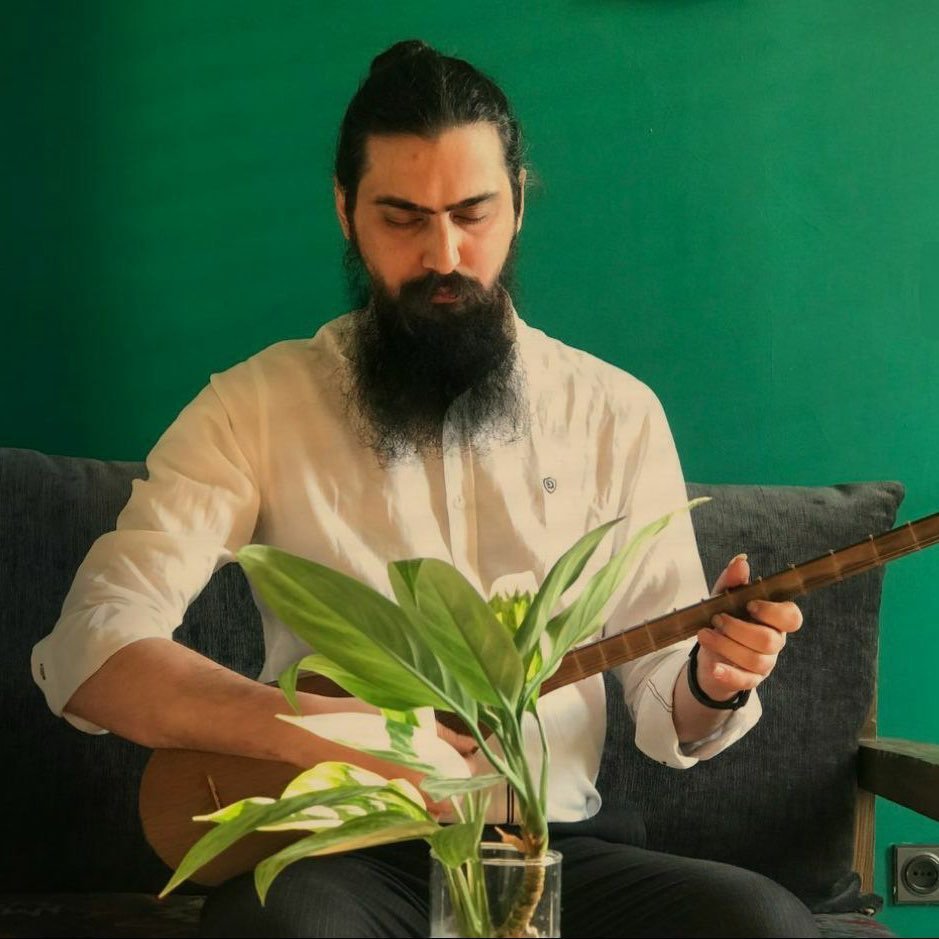
Farzad Bazgir is a tanbur player and composer. In his own words, his attachment to the tanbur began in childhood: his family home stood next to the Zemkan river, and on its porch his grandfather would play and sing the maqams Sartarz, Gol-o Khak, Bariya and Gharibi. He names masters such as Ali Akbar Moradi, Taher Yarveysi and Heydar Kaki as the ones who made the path of learning the instrument easier for him. He also says that hearing the maqam Sar-Khayvi sung by Kaki Allahmorad Hamidi, about twenty years ago, changed the course of his life. Works Zemkan: seven instrumental pieces based on the tanbur maqams, composed and played on the tanbur by Farzad Bazgir with Zakaria Yousefi on percussion. According to Bazgir it was released in 1397 SH (2018) by Ravi Azar Kimia; on BeepTunes it has been available since Ordibehesht 1398 (spring 2019). “Chaw wa Ri” (Await): a Kurdish song with tanbur, piano and dohol (February 2024). Bawan: nine pieces, about 52 minutes, with vocals by Kambiz Rajabi, shimshal by Nima Shafiei and Kurdish zarb by Aziz Kangarlou. Released by Avay-e Hananeh in Esfand 1403 SH (February 2025). On his YouTube channel he has posted pieces from Zemkan, an ensemble performance of the maqam Jangara with Sayad Mohammadi and Afshin Saebnejad, and an old recording of Kaki Allahmorad Hamidi singing a maqam. Interview In November 2018 the programme “Neyestan” on Radio Farhang interviewed him about the tanbur in Kermanshah. The programme can be heard in three parts in the Tanburban podcast (in Persian). Sources: video descriptions on his YouTube channel farzad bazgir; the album pages on BeepTunes and Apple Music; the release report for “Bawan” in Cinema Journal; the Telegram channel “Navaye Tanbur”.
Master of kalam and interpreter of the Yari daftars
Ka Bashar Bazhuei was one of the great masters of kalam (the sacred hymns of the Yarsan) and of the interpretation of the Yari daftars (the Yarsan sacred books) in the time of Agha Seyed Shamseddin Heydari. He was one of the pioneers of daftar reading from the supreme Heydari daftar archive (daftarkhaneh) and a pupil of Agha Seyed Shamseddin. At first Ka Bashar had no schooling at all in reading and writing. Like many of the old masters, he learned to read and write by way of drawing, and from then on he began copying the Yari daftars. Ka Bashar spent most of his life in the service of his spiritual guide (pir and morad), Agha Seyed Shamseddin, at the Heydari tekyeh in the holy site of Tutshami. After acquiring pure daftar knowledge in the service of Agha Seyed Shamseddin Heydari, and through much ascetic discipline and study, he attained the rank of master in the explanation and interpretation of the Yari daftars. Ka Bashar had a gift for poetry and a fine literary talent for expressing literary concepts and unfolding the meanings of the daftars in a simple, fluent way; many works of his survive, such as philosophical and explanatory poems on the interpretation of the Yari daftars, which pass from hand to hand among those devoted to daftar interpretation. He had such command of the original language of the Yari daftars that he even composed his questions and letters in the poetic language of Gorani Kurdish. In one of his letters to Ayatollah Taleqani he put challenging questions to him in Gorani Kurdish verse with unparalleled courage, and in another poem he also posed very important and key questions, beautiful to read, on the Yari faith and on matters of the daftars to the masters, Kakis and Seyeds of the people of Gurehjub and Kerend. Ka Bashar also had a poetic correspondence with Darvish Ayaz, son of Darvish Qoli Kerendi, and exchanged beautiful interpretive poems with him on matters of the daftars and of the Yarsan community. Another set of very beautiful and meaningful interpretations and questions in keeping with the daftars are the letters in verse that Ka Bashar wrote to Kaki Mohammad Qoli and Ali Mirza. Ka Bashar's poems contain the deep philosophy of the Yari faith and the history of the Yarsan community, and at times even accounts of the lives of old masters and authorities, and even of masters of his own time, on the daftar and the tanbur of the Yarsan, all of which he expressed with great beauty. In 1314 SH (1935/36), after much effort and study, Ka Bashar compiled a very large and beautiful anthology from the Yari daftars of the Heydari period held in the supreme Heydari daftar archive; it is graced by the signature of Agha Seyed Shamseddin Heydari. This copy was perhaps among the first copies of the Yari daftars of the Heydari Chehel-tan (Forty) period of Seyed Brakeh of Guran to be spread widely and in large numbers among the people; before this, Seyed Bahram Abbasvandi and Ka Rahim Kakaei, the secretary of Seyed Rostam, had also copied Yari daftars. In a famous book known as Tafsir-e Ka Bashar (“Ka Bashar's Commentary”), in simple and eloquent language and on the basis of evidence from the kalams and daftars, Ka Bashar gave a comprehensive and complete account of the Yari faith and its eras, from pre-eternity to the close of the Yarsan eras in the era of Seyed Brakeh of Guran – a work unique of its kind and the first of its kind. Thousands of copies of Tafsir-e Ka Bashar, and of the interpretive, meaning-unveiling works and poems in keeping with the daftars that he left behind, have been made and passed from hand to hand in the region, so that today there is hardly a daftar scholar in the region who has not benefited from Ka Bashar's precious words and interpretations on daftar matters and the Yarsan community. Ka Bashar Bazhuei never married and remained single to the end of his life. He usually wore a white robe and devoted his whole life to daftar reading, interpretation and the teaching of the daftar and the matters of the Yarsan community. Ka Bashar was a matchless and learned master of the Yarsan daftar, and a kind, well-mannered and sweet-spoken man, so that everyone today remembers him fondly. The Persian version of this page quotes excerpts, in Gorani verse, from a letter Ka Bashar wrote to Agha Seyed Shamseddin while the latter was imprisoned in Tehran, and from Agha Seyed Shamseddin's reply. Source: Telegram channel “Navaye Tanbur”, 7 September 2017.
Member of the Khorasan Tanbur Players
Khorasan Tanbur Players ensemble
Behnaz Mohammadian is a member of the Khorasan Tanbur Players ensemble led by Ebrahim Tehranipour. This page is short and will be expanded.
Tanbur player
Benyamin Jokar is a tanbur player who publishes his performances on his YouTube channel, among them the maqam Baya Baya.
Tanbur and tar player
Khorshid Dadbeh is a tanbur and tar player. Her tanbur solo at a concert in the Milad Tower hall in Tehran (2015) is the most-viewed video on her YouTube channel, which also has a tar solo in Shushtari and Parviz Meshkatian’s “Khazan” with the Jansouz ensemble. Source: her YouTube channel (@khorshiddadbeh8454).