28 – Maqam (Tarz) Aali Gorz Vish (“Aali Ghalandar Waved His Own Severed Head”)
2 views · Jan 19, 2015
Range: C, D, E (and E♭), F, G, A.
Variable notes: E.
Time signatures in the metric sections: 5/8.
Tuning: Haft Dastan or Barz (C, C, G)
It is one of the kalam maqams (sacred melodic-modal pieces in the tanbur repertoire of the Yarsan, or Ahl-e Haqq), with a 5-beat meter, and according to Heydar Kaki it is performed collectively by the kalam singer and those present at the jam (the Yarsan ritual gathering), in question-and-answer form. The refrain (sarband) of this maqam is the first couplet:
Aali gorz vish-ha va dasa-va
Mayayu av day firi kasa-va
Aali Ghalandar has risen to his feet, raised his staff aloft, and hastens to the aid of the oppressed.
According to Ali Akbar Moradi, this maqam is in praise of Aali Ghalandar, who was born in Dalahu in the eighth century AH (14th century CE) and, after completing his elementary studies, went to the village of Sheikhan in Paveh County, Kermanshah, where he received spiritual grace from Soltan Eshagh (that is, Soltan Sahak); then, at the Soltan’s command, he set out for Baghdad, where he was eventually killed by a group of his enemies because of his justice-seeking spirit. We know that Baba Yadegar, too, had gone to India on Soltan Sahak’s orders to propagate the faith. Interestingly, the text of the poem also recounts Aali Ghalandar’s free-spiritedness and his murder. The text of the poem also alludes to the Yarsan belief in the transmigration of the soul and in passing from jameh to jameh (from “garment” to “garment,” i.e. from one bodily incarnation to the next). According to the text of the maqam, Aali Ghalandar had apparently been in the garments of Jamshid and Iraj before, and he now regards himself as being in his last garment, having finally reached his abode; just as Shah Ebrahim, too, has been described as being in the garment of Fereydun. The Yarsan believe that in the era of Jamshid he, too, had his own Haft Tan, the Seven (symbols of Gabriel, Israfil, Azrael, Michael, Hur al-Ayn, and two spiritual successors and religious guides of the people). The reference in the text of the maqam to the Jam-e Jam, Jamshid’s cup, which according to the Mithraic tradition also had seven lines (a parallel to the Haft Tan), is noteworthy. The mystery of the Jam-e Jam, in turn, refers to the astrolabe-like engraving of the constellations on the cup, which made it highly enigmatic.
People
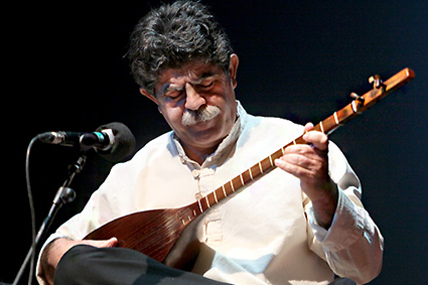
Tanbur
Comments
Sign in to commentNo comments yet. Be the first.