07 – Maqam (Tarz) Soltan-e Dine 1 (“The Sultan of Our Faith”)
4 views · Jan 19, 2015
Range: C, E♭, F, G, A♭, B♭.
Time signatures in the metric sections: 10/8, 3/8.
Tuning: Haft Dastan or Barz (C, C, G)
This maqam (a melodic-modal piece of the tanbur repertoire) is also one of the Haqqani (sacred) maqams, and its refrain is its first couplet:
Soltan-e dine ya Ali
Pir Benyamine sha Ali
Our sultan, our master and our guide is Pir Benyamin.
However, Heydar Kaki’s translation of the first couplet in the book Musiqi-ye Yarsan (“The Music of the Yarsan”) reads as follows: “The great master and the congregation of our faith is Soltan Sahak, into whose body the spirit of Ali has been breathed, and Pir Benyamin is always at his side.” Seyed Ghobad Hosseini says: “This maqam was composed by four angels named Davud, Pir Musi, Mostafa and Benyamin, and it came about at the time when the Yarsan faith (the religion of the Ahl-e Haqq) was completed by Soltan Sahak.” The text of the poem also shows that Soltan-e Dine was composed by Soltan Sahak’s companions in his praise. The poem is by Darvish Dusteh, one of the Chehel Tan (the Forty) of Aseyed Heydar Barakeh (1210–1290 AH / 1795–1873 CE). At the age of forty, Aseyed Heydar became the locus of the manifestation of the divine essence, and after that he gathered forty of the Yarsan elders, who are known as the “Chehel Tan of Asi Barakeh”. These Forty are a symbol of forty spirits or forty divine angels who, with their horses ready, saddled and harnessed, stand prepared to bring help. Because of Aseyed Barakeh’s open criticism of injustice, his takyeh (religious lodge) was attacked and assailed by the artillery of Naser al-Din Shah Qajar, and many of the books he had collected were burned. Darvish Dusteh left a book comprising 100 stanzas of kalam (sacred Yarsan verse), which has survived to this day. It should be noted that this maqam is used a great deal at Yarsan feasts and religious ceremonies.
As for the musical features of this maqam, Heydar Kaki writes: “This maqam begins with a 10-beat rhythm and then continues in a 3-beat rhythm; each hemistich has 12 beats and is performed as four 3-beat units. At its lowest it reaches E, and at its highest B♭.”
People
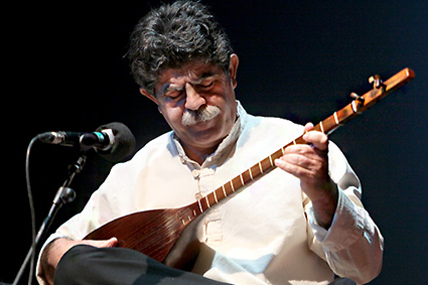
Tanbur
Comments
Sign in to commentNo comments yet. Be the first.