40 – Maqam (Tarz) Babanausi 2 (Baba Jalili)
1 view · Jan 19, 2015
Range:
Babanausi 1: C, D, E, F, G, A, B (and B♭), C.
Babanausi 2: C, D, E (and E♭), F, G, A, B (and B♭), C, D.
Babanausi 3: C, D, E (and E♭), F, G, A, B (and B♭).
Variable notes: E, B.
Time signatures in the metric sections: 2/4, 3/4 (Babanausi 1), 8/4, 12/4 (Babanausi 2)
Tuning: Haft Dastan or Barz (C, C, G)
Baba Naus, as mentioned earlier, had his period of manifestation before Soltan Sahak. He was born in the fifth century AH (11th century CE) and, like Bahlul (the first manifestation, in the third century AH / 9th century CE), lived in the manner of a madman. According to Ali Akbar Moradi, people called him Bela Sheyt, or “Ebrahim the Mad”. The story goes that Shah Khoshin (in the third manifestation), at the time of his passing, gave a tanbur to his companions and promised that whenever this tanbur became tuned and began to sound, he would reappear in that very vicinity. After years of searching, his companions found their tanbur, already tuned, in the shade of a tree in the village of Serkat (Baba Naus’s place of residence, in one of the rural districts of Paveh in Hawraman), and became certain that their spiritual master was none other than Baba Naus; and they sang these maqams (melodic-modal pieces of the tanbur repertoire) in his praise. Yet what is usually sung to these maqams are the mythological stories of Iran, which take the form of syllabic verse, generally of ten syllables, and are written down in the sacred texts of the Yarsan (Ahl-e Haqq). It should be noted, however, that the Babanausi maqams, like the Shah Khoshini maqams, have no fixed refrain (sarband). From this one can conclude that the Babanausis are very probably among the ancient maqams, since on the one hand they have no refrain from the Yarsan kalam (sacred verse), and on the other they narrate the national myths of Iran. Given these explanations, and considering that the text of the maqam praises Kaveh the Blacksmith, one may ask: did they see Baba Naus in the garment (jameh, i.e. the bodily incarnation) of Kaveh, so that they sang the first part of the maqam in praise of Baba Naus? In the view of Farzad Bazgir, the similarity between Baba Naus and Kaveh the Blacksmith lies in their revolutionary movement and their social parallels, and for this reason the maqam of Baba Naus is always sung with verses from the Shahnameh. This researcher stresses that in Guran the Babanausi 1 maqam is known as the maqam of Kaveh the Blacksmith.
One of the characteristics of the Babanausi maqams is their melodic variety, as is the wide range of this maqam, which is played on most of the frets, from the open-string C to the C low on the neck. According to Heydar Kaki, Babanausi 1 “has a rhythmic cycle that follows the old cycles and is performed in 17-beat cycles. Sometimes, though, two beats are added to it. Babanausi 2, too, has a 32-beat rhythmic cycle”. The expression “Bayabas”, mentioned in the text of the Babanausi 2 maqam, is likewise one of the terms of the Yarsan people and refers to two firm covenants that are most sacred to the Ahl-e Haqq community:
1- The covenant that God made with the Haft Tan (the Seven) in the presence of the sun (with Mithraic roots).
2- The covenant made on the bridge of Pardivar between Soltan Sahak and his companions, in which the Soltan asks the Yarsan community to act according to his creed and never to forget it.
As for Baba Jalil, or Baba Jalili (seventh century AH / 13th century CE), by whose name the Babanausi 3 maqam is known, it should be said that he held so exalted a rank that the book Pardivari assigns him a period of manifestation of his own. This period must come after that of Baba Naus, that is, between Baba Naus and Soltan Sahak, just as its maqam, too, comes after Baba Naus. Admittedly, in the light of historical findings, the places of Baba Naus and Baba Sarhang have been swapped in the Daftar-e Pardivari. It should also be mentioned that Baba Jalil Dudani is a descendant of Baba Sarhang Dudani (that is, the same Baba Sarhang).
People
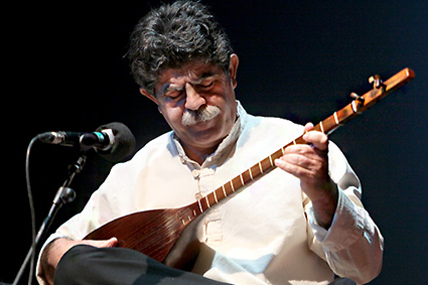
Tanbur
Comments
Sign in to commentNo comments yet. Be the first.