53 – Sey Khamushi (Seyed Khamushi)
2 views · Jan 19, 2015
Range: C, D, E, F, G, A (and A♭), B (and B♭).
Variable notes: A and B.
Lavach (sections): Opening of the maqam, Sahari, Baria (Ghatar)
Tuning: Haft Dastan or Barz (C, C, G)
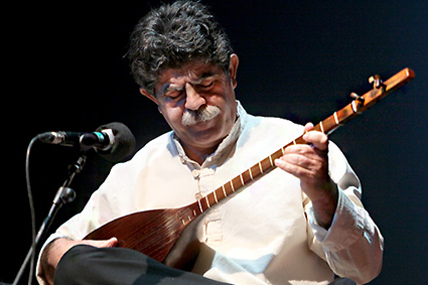
This is one of the kalam maqams (sacred melodic-modal pieces of the tanbur repertoire, set to Yarsan religious verse) and is usually performed in the Barz tuning. This maqam has three lavach (gusheh, short melodic sections): 1- the opening of the maqam (the main part), 2- the first lavach, which is played on the notes of Sahari, and 3- the second lavach, which is played on the notes of the Baria maqam.
This maqam is in fact one of the maqams attributed to Seyed Akaber, known by the epithet Khamush (“the Silent”), who lived in the ninth century AH (15th century CE). Many poems by him have survived, the main part of which is Yarsan (Ahl-e Haqq) verse composed in the form of quatrains. To understand his poetry, one must turn to the personal life of Seyed Khamush. The Khamushi lineage (khandan) is one of the great lineages of the Ahl-e Haqq. In the early days of Pardivar this lineage, under the name Khandan-e Seyed Abolvafayi (the lineage of Seyed Abolvafa), was part of the Haftavaneh organisation that was established at Pardivar in the time of the Soltan. Seyed Abolvafa left a son named Seyed Sheykh Ali, and Seyed Sheykh Ali in turn had three sons, named Seyed Khalil, Seyed Reza and Seyed Akaber. When Mireh Beg, the son of Shah Ebrahim, set out from Baghdad after the death of Seyed Sheykh Ali for Seyed Sheykh Ali’s house in order to name Sheykh Ali’s successor, the two elder sons, Seyed Khalil and Seyed Reza, went out to welcome him there. Since Mireh Beg held the rank of pir (spiritual guide) of the Khamushi Seyeds, he knew through his inner vision that Seyed Khamush, that is, Seyed Akaber, had feigned madness and was not at home; so he made it appear that he was waiting for the youngest son to come as well. After waiting for a while, therefore, he asked the brothers about him. The two elder brothers said that Seyed Akaber had gone mad and taken to the wilderness. In fact, they were waiting for Mireh Beg to choose one of them. But Mireh Beg, who was aware of this, said that he wanted the youngest son, that is, Seyed Akaber, and that he was their father’s successor. The two brothers were upset by this choice and, according to what has been related, apparently left their homeland and departed from that region. Mireh Beg, however, went into the wilderness himself, found Seyed Akaber, brought him home and said to him: “Akaber, drink. Akaber, drink of this poison that I give you. This poison is deadly, but you must drink it. Enough now of rapture and free-spiritedness. Akaber, your name shall become Khamush.” By the deadly poison is meant the transient world, which is the opposite of permanence and the killer of human virtues. In fact, Mireh Beg made him understand: until today you were at ease and carefree; no one had any business with you, and you had none with others. But from today on your responsibility begins, and your battle against the forbidden things of the transient world commences. Therefore I change your name from Akaberi to Khamush, so that you give up that rapture and clamour. After this event Seyed Akaber gave up that tumult and clamour, was given the title Seyed Khamush by Mireh Beg, revealed his pure and noble inner nature and began to guide and support the lineage of Seyed Abolvafa. Moreover, according to Yarsan belief, through his inner worthiness and the moral virtues he acquired, he became a vessel for the manifestation of the divine Essence.
People
Tanbur
Comments
Sign in to commentNo comments yet. Be the first.