34 – Maqam (Tarz) Yaran Jem Nian (“The Companions Gathered at the Jam”)
2 views · Jan 19, 2015
Range: C, D, E, F, G, A, B♭.
Tuning: Haft Dastan or Barz (C, C, G)
It is one of the kalam maqams (sacred melodic-modal pieces in the tanbur repertoire of the Yarsan, or Ahl-e Haqq), with a broad, slow meter, and according to Heydar Kaki “it is performed on the notes of the maqam ‘Rezhyan Dalahu,’ and one of the characteristics of this maqam is the emphasis on the note ‘A’ as the shahed (focal note).” Its refrain (sarband), too, is the first couplet:
Hey dida-giani, yaran jem nian
Shadi sha karmi, sham chian varav ghulaga
O light of my eyes and my soul, the Companions have gathered in the assembly. I wave my hands and give myself to the sama (mystical dance)
Our master has turned toward the qibla.
Zolal Zolal (“Limpid, Limpid”), from which the text of this maqam is taken, is the part of the book Saranjam (“The Conclusion”) that is devoted to the recorded debates about the succession of Baba Yadegar. After the death of Soltan Sahak, Baba Yadegar had become his successor. The poems known as Zolal Zolal say that the two main nominees, or candidates, for the royal throne are Baba Yadegar and Ebrahim. And this while Baba Yadegar is the shah, and in these debates he and his companions try to convince others, including Ebrahim, that he is worthy of and entitled to the kingship; this in turn shows Baba Yadegar’s desire for his kingship to continue. Now one must ask: given that there is a king on the throne, why does this so-called “battle of the signet ring” over the kingship take place? Had Baba Yadegar attained the kingship for a fixed period, and is that period coming to an end? The Yarsan works relating to this period say that in the end a person named Khiyal becomes the successor of Shah Yadegar. Why does Khiyal attain this position? Was choosing him a third solution? The poems also say that Ebrahim consents to the choice of Khiyal and leaves Dalahu, but the fate of Shah Yadegar remains unclear. The reference to Barbad and his jameh (“garment,” i.e. bodily incarnation) in the text of the maqam also seems to indicate that those present had come to discover that in previous lives Khiyal had been in the garment of Barbad; perhaps because of a spellbinding tanbur performance.
People
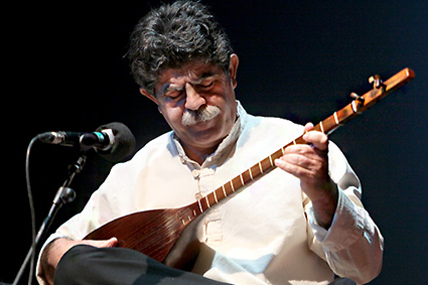
Tanbur
Comments
Sign in to commentNo comments yet. Be the first.