14 – Maqam (Tarz) Sahari or Seheri (“At Dawn”)
Jan 19, 2015
Range: C, D, E♭, F, G♭, A (and A♭), B, C.
Variable notes: A.
Time signatures in the metric sections: 7/8, 2/4.
Lavach (sections): Opening of the maqam, first avaz, first zemzemeh, second avaz, second zemzemeh.
Tuning: Panj Dastan or Tarz (C, C, F)
This is one of the majlesi maqams – secular maqams (melodic-modal pieces of the tanbur repertoire) played at gatherings – which, according to Heydar Kaki, has five lavach (gushehs, i.e. melodic sections): (1) the opening of the maqam, (2) the first avaz (unmetered vocal section), (3) the first zemzemeh (humming passage), (4) the second avaz, (5) the second zemzemeh. Some of the lavach of this maqam are metric, with a two-beat and a seven-beat rhythm. This maqam is not performed at the religious ceremonies of the Yarsan (Ahl-e Haqq) and, because it is not a kalam (sacred Yarsan verse), it has no sarband (refrain).
Jean During says of this maqam: “In practice, Sahari is an instrumental dastgah [modal system], played in a two- or four-beat metre. Transposed up a fourth, the scale of this dastgah forms the dastgah of Sheykh Amiri. What makes this dastgah special is the ambiguity of the fourth degree, which sometimes sounds like a major third and sometimes like a diminished fourth. Another characteristic of this maqam is the passage B♭–B and the climax on D♭.” According to Ali Akbar Moradi, Sahari was a reveille tune that used to be played on the sorna (shawm) at dawn. The poems by Mowlavi Kord were also chosen in such a way that they allude to the dawn of nature, that is, spring, and this correspondence is remarkable. The chenur flower mentioned in the text of the maqam is one of the native plants of the Kurdish regions in the Zagros highlands, especially Dalahu; it is used in Kermanshahi ghee and, fittingly, its growing season also falls in the dawn of nature, that is, spring. The sweet scent of this plant perfumes all the plains, and in the Kurdish regions the fragrance of the beloved’s hair is even compared to the scent of chenur.
It should be noted that Seheri is also one of the hureh maqams. As mentioned earlier, hurehs are the mythic songs of Iran, sung in the Kurdish language. The hureh maqams comprise: (1) Gela Khak, (2) Gela va Dara, (3) Baladastani, (4) Shah Hoseyni, (5) Sarukhani, (6) Jelowshayi, (7) Tarz, (8) Majnuni, (9) Sahari, (10) Baria, (11) Do Bala, (12) Gharivi, (13) Ban Banayi, (14) Pavamuri. Today no instrument is used in singing hureh, but in the past hureh was performed with the tanbur. The poems sung in hureh usually have ten syllables and lyrical and epic themes. Kurdish warriors also used to sing hureh in battle.
People
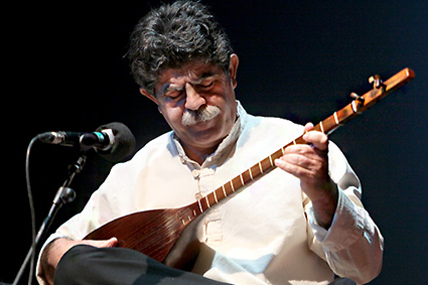
Tanbur
Comments
Sign in to commentNo comments yet. Be the first.