62 – Do Vala (“Two Lovers”)
2 views · Jan 19, 2015
Range: C, D, E♭, F, G♭, A (and A♭), B.
Variable notes: A.
Time signatures in the metric sections: 5/8, 2/4.
Lavach (sections): Beginning of the maqam, first allusion to Maqam Sahari, continuation of Maqam Majnuni, second allusion to Maqam Sahari, Lang section (in “limping” rhythm), Sahari-Majnuni, tahrir (melisma) and end of the maqam.
Tuning: Panj Dastan or Tarz (C, C, F).
It is one of the majlesi maqams, the secular melodic-modal pieces of the tanbur repertoire played at gatherings; its main parts are performed in simple and limping (asymmetric) rhythms, and at the same time the metric section of Sahari is also performed within it. The lavach (sections) of Do Vala are as follows: 1- Beginning of the maqam 2- First allusion to Maqam Sahari 3- Continuation of Maqam Majnuni 4- Second allusion to Maqam Sahari 5- Lang section 6- Sahari-Majnuni 7- Tahrir and end of the maqam.
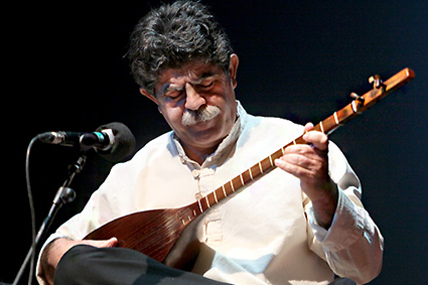
According to Ali Akbar Moradi, Do Vala means “two lovers”, referring to Leyli and Majnun or to Shirin and Farhad. In the version of Shirin and Farhad that Ali Akbar Moradi has performed, Farhad is introduced as a prince, the son of the Khagan of China; this version goes back to the Turkic telling of the story of Farhad and Shirin (Farhad and Shirin as told by Ali-Shir Navai, in the Uzbek language). The poem of this maqam is transmitted from Abbas Kerendi (thirteenth century AH / 19th century CE). Abbas Kerendi, too, was one of the Chehel Tan (the Forty) of Aseyed Brakeh.
People
Tanbur
Comments
Sign in to commentNo comments yet. Be the first.