58 – Sar Tarz (“The Beginning of Tarz”)
1 view · Jan 19, 2015
Range: A♭, B♭, C, D (and D♭), E (and E♭), F, G, A (and A♭), B♭, C, D♭.
Variable notes: D, E, A.
Lavach (sections): Opening of the maqam, first avaz (unmetered vocal section) and first forud (cadence), second avaz, third avaz, first zemzemeh (humming passage), fourth avaz, second zemzemeh, third zemzemeh, five-beat section of Maqam Tarz, forud and end of the maqam.
Time signatures in the metric sections: 5/8.
Tuning: Panj Dastan or Tarz (C, C, F)
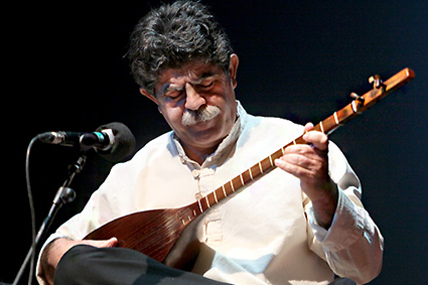
It is one of the majlesi maqams, the secular melodic-modal pieces of the tanbur repertoire played at gatherings, and it is also called “Tarz” (“manner”). Among the Yarsan (Ahl-e Haqq) people this maqam is known as the oldest maqam of the tanbur, and when a pupil begins to learn to play the tanbur, the kalam singer (master), that is, the singer of the sacred Yarsan verse, first teaches the pupil this maqam. This maqam is also the name of one of the gushehs (melodic units within a dastgah) of the dastgah (modal system) of Homayun, and the name Tarz even exists in Turkish and Arabic music. This maqam is always played in the Tarz tuning and has given its name to this tuning.
According to Heydar Kaki, chromatic semitones play a fundamental role in the performance of this maqam, and the core of the Tarz singing is sung on these chromatic semitones (C, D♭, D, E♭). This maqam closely resembles hureh singing (an ancient Kurdish unmetered vocal genre), a type of song that most music experts count among the earliest songs of humankind, and it may be connected with the very same strange scale that Farabi mentions in his book Musiqi al-Kabir (“The Great Book of Music”) with regard to the Baghdadi tanbur. The instrumental part of this maqam is performed both without rhythm and in metered form, following a kind of five-beat rhythm.
The range of this maqam spans more than one octave, and its various lavach (sections) are as follows: 1- Opening of the maqam 2- First avaz and first forud 3- Second avaz 4- Third avaz 5- First zemzemeh 6- Fourth avaz 7- Second zemzemeh 8- Third zemzemeh 9- Five-beat section of Maqam Tarz 10- Forud and end of the maqam.
According to Ali Akbar Moradi, this maqam is one of the ancient and principal maqams of the tanbur, and its epic tone is very pronounced. He also stresses that in the past, beginners on the tanbur were started with Maqam Sar Tarz.
It should be noted, however, that there are two accounts of this maqam:
1- The first account: when the angels kneaded Adam’s clay and fashioned Adam from a special clay (“yellow clay”, as the Yarsan say), they used Maqam Sar Tarz to breathe the soul into it, and with this melody they breathed the soul into the earthly human being.
2- The second account: Rostam, the mythical hero of the Shahnameh (“The Book of Kings”), at a spring during the fourth of his Seven Labours (Haft Khan), sees a tanbur hanging from a tree, takes it down and begins to sing and play. This maqam is said to be the very melody that Rostam played at that time.
Given the mystical text of the maqam, the first account seems more plausible, since according to the Shahnameh, Rostam’s words at the fourth labour are not mystical – unless the melody is ancient and the Yarsan attached their own poetry to it. In this regard it should be noted that Yarsan musicians emphasise that the maqam is majlesi, and this in itself shows that they believe the melody of this maqam to be older than the formation of the Yarsan faith in the Islamic period, and that the poem of this maqam, which is by Sheykh Amir, was merely attached to the melody. Another point to note is that if the poem of “Maqam Gharibi” is sung to this maqam, it represents exactly Rostam’s song at the fourth labour and becomes fully tangible in light of the second account, since in the Shahnameh Rostam, while playing the tanbur, alludes to his own forlornness far from home (gharibi).
As for the ebony wood to which the text of the maqam refers, it should also be said that this wood is so dense that, unlike most woods, it sinks in water, and its grain is so fine that it becomes perfectly smooth when polished – so much so that this has made it a decorative, precious and expensive wood. In music, too, ebony is of the highest quality. The Shahnameh also relates that the throne of Khosrow Parviz was made of ebony.
People
Tanbur
Comments
Sign in to commentNo comments yet. Be the first.