19 – Maqam (Tarz) Sheykh Amiri or Sheykh Emiri 2 (attributed to Sheykh Amir)
2 views · Jan 19, 2015
Range: A (bass string), B and B♭ (bass string), C, D, E♭, F, G♭.
Variable notes: B.
Time signatures in the metric sections: 3/4 (in Sheykh Emiri 2)
Tuning: Haft Dastan or Barz (C, C, G)
The maqam Sheykh Amiri is one of the prominent maqams (melodic-modal pieces of the tanbur repertoire) among the kalam maqams, the sacred maqams sung to the verse of the Yarsan (Ahl-e Haqq); every listener who hears the mysterious, enigmatic mood of these maqams is moved and is seized by a deep and extraordinary feeling. According to Heydar Kaki, “the melodic intervals and the slow rhythm in these maqams create a mysterious mood and a melancholic character, which has all the greater effect the more skilfully it is performed.”
Heydar Kaki also writes that “Sheykh Amiri 1 is performed in the Haft Dastan tuning, and in the Guran region it is also called the maqam ‘Pishravi’. It is played on the degrees ‘D, E♭, F, F♯’, and the note D acts as the shahed [focal note]. Although the intervals and degrees used in this maqam correspond to those of the maqam Sahari, in meaning and melodic expression it conveys an entirely different atmosphere. This maqam has no fixed sarband [refrain], and its poems are chosen from the sacred texts of the Yarsan. Sheykh Amiri 2, for its part, has a calm, gentle, fairy-like metre, performed in groups of three, which follows the old rhythmic cycles, and it is performed in the Barz tuning. The difference between Sheykh Amiri 2 and Sheykh Amiri 1 is that this maqam also has a forud [descent] section, which is performed in the lowest register on the degrees C and B.” According to the research of Farzad Bazgir, Sheykh Amiri 2 is known as “Pishravi-ye Guran” because it recounts the pillars of the Yari faith and of devotion to the Truth. Also, unlike Sheykh Amiri 1, Sheykh Amiri 2 has a sarband, which is the first couplet:
Vinay parvana juyay jam bu
Faregh na jifay, ziad u kam bu
Like the moth, be in search of the gathering of the companions, and free from the more and less of the world’s material goods.
It should be noted that the Sheykh Amiri maqams are attributed to Sheykh Amir Zulei, who was discussed earlier.
People
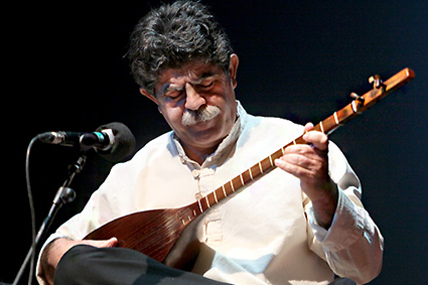
Tanbur
Comments
Sign in to commentNo comments yet. Be the first.